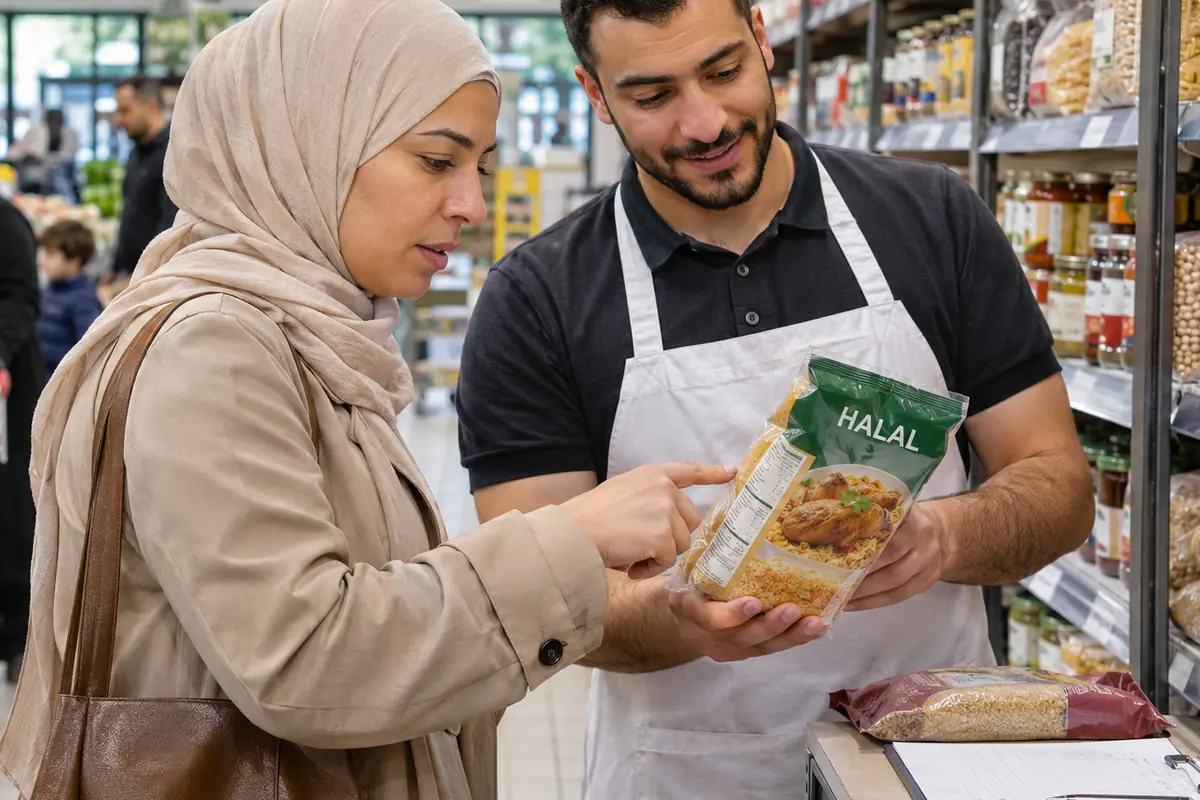
In Croatia, Zagreb is the city where halal supermarket shopping is easiest to organise, thanks to a Muslim community with Bosnian, Albanian and other roots and to national chains that stock a growing choice of halal-friendly groceries. Shoppers combine hypermarkets, neighbourhood grocers, butchers run by community members and the stalls of the city markets. Prices and offers change with each retailer and each week, so comparing flyers, loyalty apps and shelf tags becomes part of the routine. Labels, certificates and ingredient lists remain the dependable guide for every purchase.
Halal supermarkets and groceries across Zagreb's districts
Zagreb stretches from the old upper town down to the large residential districts south of the Sava river, and the shopping pattern follows that geography. Central streets around the main square offer small grocers and convenience stores, while the big housing areas in the south and west gather the large supermarkets and shopping centres with car parks.
Muslim residents of Zagreb are largely of Bosniak origin, with further communities from Albania, Kosovo, North Macedonia, Turkey and the Arab world, as well as students and business travellers. Each group has shaped a few specialised grocers, bakeries and meat counters, and these shops usually spread by word of mouth rather than through large advertising.
For a first visit, it helps to look at the area around the Islamic centre and the mosque, then at the shopping malls on the edge of the city. Opening hours, stock and halal ranges differ from shop to shop, so a quick call or a look at the retailer's own page saves a wasted trip.
National chains with halal-friendly shelves
Croatia's large retail chains, among them Konzum, Spar, Lidl, Kaufland, Plodine and Tommy, dominate everyday shopping in Zagreb. None of them is a dedicated halal retailer, yet their shelves hold many products that suit halal shoppers: rice, pulses, flour, oils, canned vegetables, dairy, tea, dates, nuts and plain frozen vegetables.
Meat is the sensitive category. Standard supermarket poultry and beef are not automatically halal, so careful shoppers look for an explicit halal mention and a named certifier on the pack, or they turn to a specialist butcher. Ready meals, sauces, biscuits and desserts need an ingredient check for gelatine, alcohol-based flavourings and animal fats.
Discount formats attract families who buy in volume and stretch the weekly budget. Their own-label ranges often carry the plainest ingredient lists, which makes label reading faster. Seasonal promotions, loyalty cards and printed leaflets are the usual channels through which these chains announce their offers.
Butcher counters and halal meat: what to look for
Meat is where most Zagreb halal shoppers put their attention first. A trustworthy counter can explain where the animals were slaughtered, which body supervises the process and whether the meat is sold fresh or frozen. Staff who answer these questions openly are generally a better sign than any shop-window slogan.
In Croatia the religious community has its own certification body, linked to the Islamic Community in Croatia, and its mark appears on some local products and on products from certain importers. Imported halal beef and lamb frequently arrive from neighbouring Bosnia and Herzegovina, other European countries or further afield.
Mixed shops that sell pork beside halal products deserve a closer look at separation, packaging and labelling. Many buyers prefer stores where the whole counter is halal, while others accept sealed, certified packs from a general supermarket. Both approaches rest on the same principle: the claim must be visible on the pack.
Neighbourhood grocers, bakeries and the city markets
Zagreb's markets, the central Dolac above all, are best known for fruit, vegetables, flowers, cheese and cured goods rather than for halal meat. They still matter to halal shoppers, because fresh produce, honey, herbs and dried fruit need no certificate and can be bought directly from growers.
Small grocers run by Balkan, Turkish and Middle Eastern families fill the gaps that large chains leave. Typical shelves carry flatbreads, burek-style pastries, tahini, olives, spices, semolina, dried beans, pickles and sweets. Some stock imported sauces and packaged meats that are hard to find in a hypermarket.
Bakeries deserve a separate mention in a Balkan capital. Many sell bread, pita and filled pastries every morning, and customers ask about fillings and the fat used. Meat or cheese fillings, in particular, call for a question at the counter, since recipes vary from one bakery to another.
How prices and offers work for halal groceries
Comparing prices in Zagreb starts with the unit price printed on the shelf tag, usually per kilogram or per litre, because pack sizes differ greatly between brands. A large pack is not always the cheaper choice, and a halal specialist may charge more for meat but less for spices, rice or dried fruit.
Offers come in several forms: weekly leaflets, loyalty-card reductions, multi-buy deals, end-of-day markdowns on fresh goods and seasonal campaigns. Chains publish these on their websites and apps, so a few minutes of browsing before the weekly shop often reveals where staples such as rice, oil and flour are cheapest that week.
Quality, origin and certification belong in the comparison as much as the amount on the tag. A cheaper pack without a visible halal mention is not the same product as a certified one. Keeping a short list of trusted brands and checking the stores' own offer pages keeps the budget under control without guesswork.
Reading halal labels and certificates in Croatia
A Croatian pack normally lists ingredients in Croatian, sometimes alongside English, German or Slovenian text. Words worth recognising include svinjetina for pork, želatina for gelatine, alkohol for alcohol and mast for fat. Allergen information is highlighted in bold or capitals, which also helps when searching for animal-derived additives.
Halal logos differ from one certifier to the next, and imported goods may carry marks from Turkey, Malaysia, the Gulf states or Western Europe. Shoppers who are unsure can ask the importer or the certifier named on the pack, and trusted community members often share lists of reliable brands.
E-numbers such as E120, E441 and E471 can be of animal or plant origin, and a pack rarely says which. Vegetarian and vegan marks provide a useful extra reassurance for sweets, yoghurts and baked goods, even though they are not a halal certificate in themselves.
Newcomers, students and visitors shopping in Zagreb
Students at the university and professionals posted to Zagreb often arrive without knowing local shops. The simplest route is to ask at the mosque or at student associations, where members share the grocers and butchers they use, and then to complement this with the big chains for everyday staples.
Travellers from the Gulf and Western Europe regularly pass through Zagreb on the way to the Adriatic coast, and the capital serves as a stop to stock up on rice, snacks, drinks and ready-to-eat items. A cool bag helps for short journeys when buying chilled halal meat or dairy.
Language is rarely a barrier in shops in the centre, where staff often speak English or German. Showing a photo of a product or a translation of an ingredient on a phone usually settles any doubt quickly, and shop assistants tend to be helpful when asked politely.
Online ordering and home delivery from Zagreb shops
Several Croatian retailers allow customers to order groceries online and receive them at home or collect them in the store. This is practical for heavy items such as rice sacks, oil and bottled water, and for households without a car in the outer districts.
Online catalogues display ingredient lists and sometimes allergen filters, so halal shoppers can read labels at the screen before ordering. Substitutions are the main risk: when an item is out of stock, the replacement chosen by the picker may not suit dietary rules, so it pays to refuse substitutes where possible.
Specialist importers and small shops also take orders by phone or messaging apps and deliver within the city, particularly for meat boxes and bulk dry goods. Before paying, buyers should confirm origin, certification and delivery conditions for chilled products in writing.
Retailers and organisations to know
- Konzum — Croatia's largest supermarket chain, with stores in most Zagreb districts, a wide choice of rice, pulses, dairy and vegetables, and an online ordering service.
- Spar Hrvatska — Supermarket and hypermarket brand with larger formats around Zagreb, useful for pantry staples, frozen vegetables and imported spices.
- Lidl Hrvatska — Discount chain whose weekly leaflets and own-label ranges suit families buying staples in volume.
- Kaufland Hrvatska — Hypermarket format with a broad grocery and non-food range, often located in the large shopping areas of Zagreb.
- Plodine — Croatian retail chain present in and around Zagreb, with a mix of fresh produce, bakery goods and household groceries.
- Metro Cash & Carry Hrvatska — Wholesale supplier serving professional customers and small shops, relevant for bulk dry goods and catering supplies.
- Islamic Community in Croatia — Religious community based in Zagreb, linked to a halal certification body whose mark appears on some local and imported products.