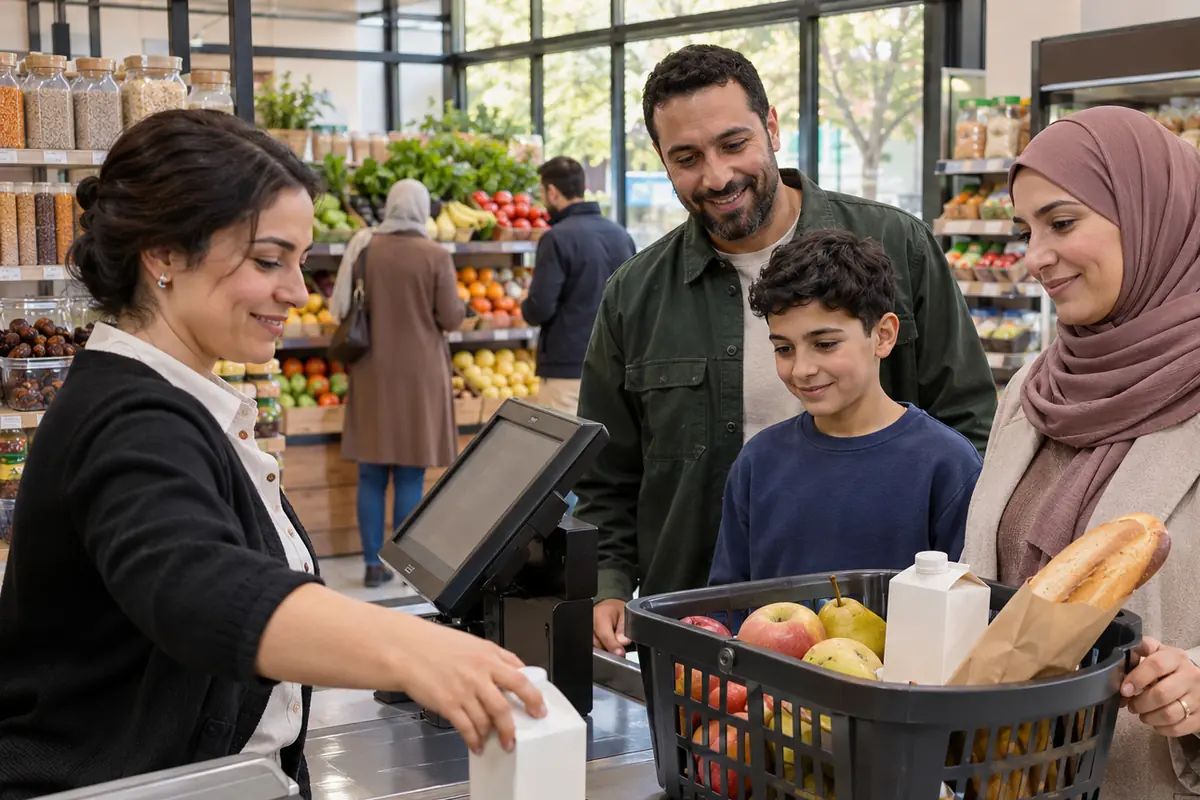
In Edina, Minnesota, Ramadan market food shopping blends neighborhood supermarkets with specialty stops in nearby Minneapolis and St. Paul. This inner-ring suburb has no large bazaar of its own, so families gather dates, halal meat, milk, flatbread and produce from several places and plan trips around cold weather and work schedules. Opening hours generally follow regular retail patterns at local chains, while independent halal shops across the metro area often adapt their timetables for the evening rush. Confirming a schedule with the store before leaving home saves time in winter conditions.
Ramadan market shopping from a Twin Cities suburb
Edina sits beside Minneapolis, so Ramadan market shopping usually means combining a local supermarket trip with an outing to the busier halal and East African shops elsewhere in the metro. Residents are accustomed to driving a short distance for specialty ingredients.
The Twin Cities hold one of the largest Somali communities in the country, and that presence shapes the shopping map. Malls and storefront markets in Minneapolis sell camel-milk products, spiced teas, sambusa wrappers, rice and fresh meat that suburban stores seldom stock in depth.
Edina households therefore often work in two layers. Weekly pantry items come from nearby grocery chains, and a periodic run to a specialty halal market covers meat, spices and sweets. This division keeps the weekday evenings relaxed.
Shopping centers near Southdale and the busy commercial corridors offer plenty of parking and extended bakery, deli and produce departments, which suits quick stops for fresh items before the evening meal.
Supermarkets and specialty halal grocers within reach
Regional and national chains serve most day-to-day needs. Local grocers with a strong reputation for fresh produce, bakery goods and deli counters sit close to residential areas, while discount supermarkets and warehouse clubs help families who buy in volume for guests.
Halal-labeled chicken and beef are available at some chains in limited quantities, and shoppers who prefer a butcher with direct knowledge of slaughter practices tend to head to dedicated halal shops. Asking staff at the counter is common and welcomed.
Middle Eastern and South Asian groceries in the wider metro stock tahini, couscous, vermicelli, ghee and tinned fava beans. Their shelves often reflect the community nearby, so a store in one suburb can differ noticeably from another.
University students from abroad, hospital staff and professionals who work around Edina add to the mix of customers, and their requests encourage some stores to widen their selection of halal snacks, frozen meals and ready-to-heat dishes.
Dates, milk and the iftar table essentials
The iftar basket begins with dates, usually sold in tubs or boxes in several varieties. Milk, laban, yogurt and fresh juice follow, along with cucumbers, tomatoes, parsley and lemons that appear in salads and soups.
Somali households commonly add rice, pasta, goat or lamb, canned tomato, and ingredients for sambusa and bajiya. Arab and South Asian families prepare lentil soup, harira, samosas and pakoras, and the shared pantry list explains why spice aisles stay busy.
Fresh fruit, especially bananas, oranges and melons, plays a role too. Many shoppers keep a bowl on the counter so that children and guests can break the fast with something light before the main meal.
Sweet items round out the list. Shoppers pick up pastries, halwa, baklava, cardamom cookies and syrup-soaked cakes, and some cooks buy flour, sugar, ghee and spices to bake at home, filling the kitchen with the smells that signal the evening is near.
Opening hours and Ramadan schedule changes
Opening hours at large chains usually stay consistent, so shoppers can rely on the posted schedule for everyday trips. Individual stores occasionally adjust at the edges, and holiday weeks sometimes bring different timetables.
Independent halal shops are more flexible. A few start their day late and keep serving well into the night for people coming after evening prayers, whereas others shut briefly near sunset and then welcome customers again.
Since each business decides for itself, the safest approach is to check the store's own listing or call ahead. Winter storms can also shorten days at short notice, a factor that residents of Minnesota take seriously.
Holiday celebrations at the close of the month usually bring another round of schedule changes. Bakeries and butchers prepare for heavier demand, and some shops extend their service while others close earlier for family gatherings.
Cold weather, snow and planning around the long drive
Weather shapes Ramadan shopping in Edina more than in many other American cities. When the month falls in colder seasons, icy roads and early darkness push people to consolidate errands and avoid unnecessary evening trips.
Many families stock the freezer in advance with halal meat, frozen pastry and prepared dough, then return only for fresh bread, milk and vegetables. This habit also helps when guests arrive unexpectedly.
Warm clothing and patient driving are part of the routine, and carpooling to a community center or a specialty store is common. When the month lands in summer, longer daylight shifts the pattern in the opposite direction.
Suhoor food and early-morning shopping
Suhoor meals in Minnesota homes tend to be hearty. Oatmeal, eggs, cheese, bread, dates, beans and fruit are popular, and some Somali families prepare anjero or soft pancakes with tea before the pre-dawn prayer.
Because most stores are closed in the hours before dawn, shoppers buy suhoor ingredients the previous day. Bulk purchases of oats, honey, nuts and milk are common, and several households prepare dishes in advance to avoid cooking while sleepy.
Gas-station shops and twenty-four-hour pharmacies sometimes sell water, bread or snacks, but halal certification on those products varies. Reading ingredient labels remains the dependable approach.
Cafés and bakeries that open before the workday sometimes sell coffee, pastries and savory sandwiches, yet pork and alcohol-based flavorings can appear in baked goods, so careful buyers ask about ingredients rather than assume.
Delivery, pickup and online ordering
Grocery delivery and curbside pickup are popular in a region where winter can make parking-lot walks unpleasant. Customers order produce, dairy and pantry goods from local supermarkets and collect them without leaving the vehicle.
Specialty halal items are harder to find through large apps, so some shoppers phone butchers directly or use message groups run by community organizations. These informal channels frequently share news about fresh deliveries.
Substitutions are worth watching. A requested halal product might be replaced by something similar but uncertified, so checking the package on arrival and keeping the receipt is wise.
Community iftars and shared food
Mosques and cultural centers across the metro host group iftars, and volunteers purchase rice, chicken, dates and drinks in large quantities. Restaurant-supply stores and cash-and-carry outlets are common sources for these bulk orders.
Neighbors in Edina often bring dishes to gatherings, and cooks swap recipes for soups and pastries. Shared tables also encourage people to buy extra staples, which is why certain products can vanish quickly from shelves.
Food shelves and charitable groups collect pantry goods during the month. Shelf-stable items such as beans, flour, oil and canned vegetables are especially appreciated because they can be distributed over several weeks.
Local volunteers coordinate drop-offs through congregations, schools and neighborhood networks, so people who prefer to give rather than attend can still take part by adding a few extra items to their weekly grocery order.
Retailers and organisations to know
- Lunds & Byerlys — Minnesota grocery chain headquartered in Edina, known for fresh produce, bakery goods and prepared foods.
- Cub Foods — Minnesota-based supermarket chain with wide aisles for pantry staples, dairy and bulk shopping.
- Costco — Warehouse club offering dates, rice, nuts and large cuts of poultry for iftar gatherings and community meals.
- Target — Minneapolis-based retailer selling groceries, dairy and pantry basics alongside household goods.
- Aldi — Discount supermarket chain with budget-friendly produce, dairy and pantry items across the Twin Cities.
- Instacart — Delivery and pickup platform connecting Twin Cities households to supermarkets and specialty stores.
- IFANCA — Halal certification organization whose mark appears on many packaged foods sold in American stores.