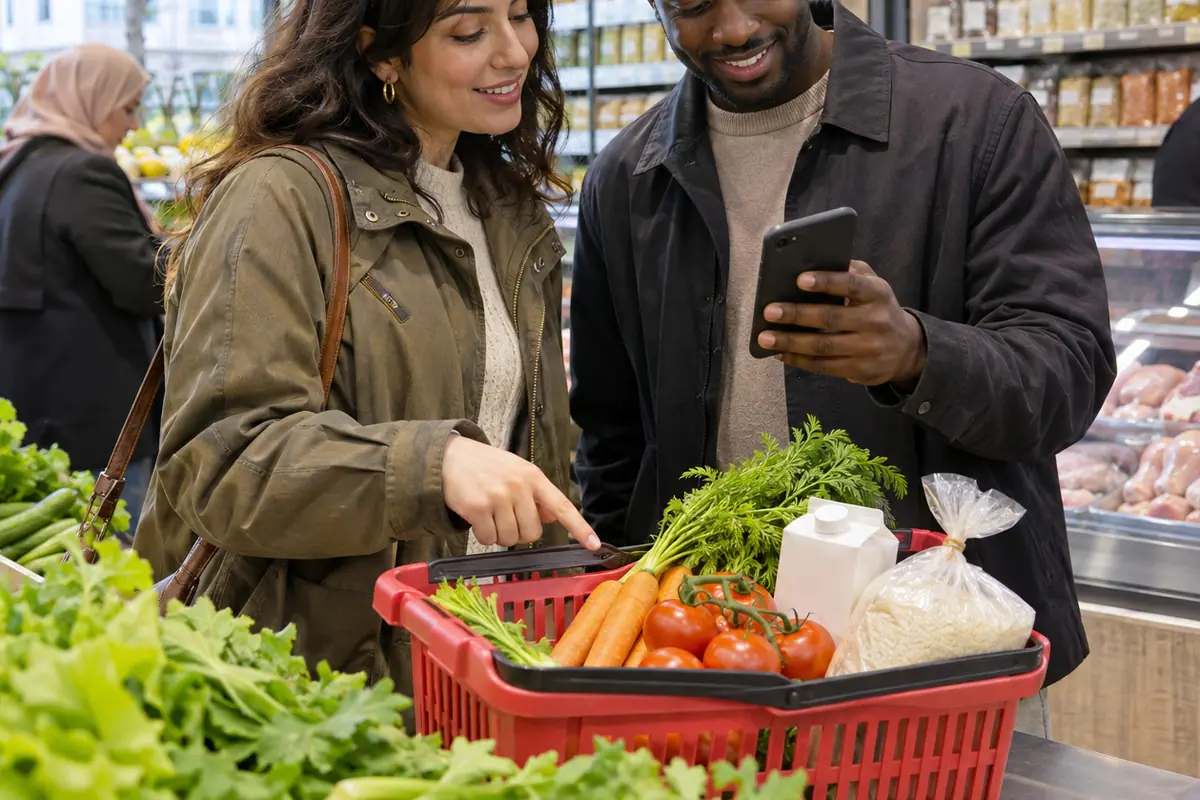
UK, Aberdeen offers a halal supermarket scene shaped by its port, its oil industry workforce and its two universities. Such a store stocks meat from animals slaughtered to Islamic requirements, with rice, spices, pulses, dairy, frozen foods and household groceries on neighbouring shelves. In the Granite City, such shopping is split between national chains with a halal shelf, independent grocers around the centre and Torry, and specialist butchers. Because the north-east of Scotland sits far from the big wholesale hubs, stock, prices and offers depend heavily on delivery schedules.
Halal supermarket formats found in Aberdeen
Shoppers in Aberdeen usually meet three kinds of outlet. Large national supermarkets keep a halal chilled shelf, often with poultry and minced lamb in sealed trays. Independent grocers, many of them family-run, carry a wider spread of South Asian, Middle Eastern and African staples. Specialist butchers offer cuts to order, which suits households cooking for gatherings.
Each format answers a different need. A weekly shop often starts in a retail park store with a car park and a trolley, while top-up purchases of fresh herbs, flatbreads or spices happen at smaller shops nearer home. Which one fits depends on where you live, how you travel and how much you plan ahead.
Opening hours, parking and the width of the aisles also shape the choice. Families with young children often prefer a store with level access and wide passages, while people shopping on foot value a small grocer on the bus route. A short list of two or three regular shops usually covers every need.
Neighbourhoods where halal groceries are easy to find
Torry, with its long history of mixed communities close to the harbour, is the district people most readily associate with international groceries. Around George Street and the streets leading toward the centre, small shops sell halal meat, dried fruit, tea and imported sauces. Rosemount and Old Aberdeen also have convenience stores that stock certified items.
Further out, Bridge of Don, Kincorth and Cults are served mainly by large supermarkets rather than specialist grocers. Households there tend to combine one big shop with an occasional trip into town for items the local branch does not carry, such as particular cuts or regional spice blends.
How certified halal meat is recognised on the shelf
Packaging in Scottish shops usually shows the name of a certification body or a statement about slaughter on the label. Buyers look for that mark, check whether the product is described as hand-slaughtered or machine-slaughtered, and confirm that no pork or alcohol appears among the ingredients. Different households accept different standards, so the label is the starting point.
Counter service gives another route to reassurance. A butcher can explain the origin of the meat, the supplier and the certifying organisation, and can usually show documentation on request. Asking is normal and welcomed, particularly when buying for a celebration or for guests with strict requirements.
Written information in English, Urdu or Arabic on larger packs can help new arrivals. Reading the small print on frozen products, sauces and snacks matters as much as inspecting the meat, since halal status applies to every ingredient and not only to the main item in the pack.
Comparing prices without relying on guesswork
Shelf prices change from week to week, so the useful habit is comparison by unit cost, such as the cost per kilo of chicken or per litre of cooking oil, shown on the shelf ticket. Large chains display this clearly. Independent shops may price loose goods by weight, which rewards buying only what a recipe needs.
Distance also counts. A cheaper bag of rice across the city can cost more once bus fares or fuel are added. Many shoppers therefore pick one reliable store for bulk staples and use the nearest shop for perishable items, adjusting as they notice which basket stays steadier over several visits.
Keeping a note of unit costs for a handful of regular items, such as chicken thighs, rice and eggs, makes it easy to see whether a shop is consistently reasonable. Memory alone is unreliable, and a simple phone note offers a fairer picture over a month than any single visit.
Offers, multibuys and seasonal promotions
Chains regularly run multibuy deals and loyalty-card discounts, and some of these apply to halal lines in the same way as to other products. Independent grocers tend to promote sacks of rice, flour and lentils, tins and frozen items in bulk. Terms differ from store to store, so a quick look at the shelf label or the shop window is the safest check.
Religious calendars influence demand. Ahead of Ramadan and the two Eids, stores often widen their range of dates, sweets, ghee and meat portions, and butchers may take advance orders. Anyone planning a large gathering benefits from asking early, since popular items can sell out quickly.
Community noticeboards, mosque bulletins and shop windows often announce tasting days or new product arrivals. Following the social media pages of a favourite grocer is another practical way of hearing about fresh deliveries, without having to travel across town on the chance that a particular item is back in stock.
Halal frozen food, dairy and pantry staples
Aberdeen's long winters make the freezer a practical ally. Frozen halal chicken pieces, kebab meat, samosas, parathas and vegetables keep well, and they allow households to stock up when the roads are poor. Pantry staples such as basmati rice, chickpeas, red lentils, tinned tomatoes and cooking oils round out the cupboard.
Dairy and bakery items deserve a glance at the ingredient list. Cheese may contain animal rennet, certain desserts contain gelatine, and some sauces include alcohol-based flavourings. Vegetarian-labelled alternatives are a common route for shoppers who want to avoid uncertainty, particularly in fast-moving convenience stores.
Sharing is part of the culture here. Neighbours coordinate bulk purchases of sacks of rice or cases of tinned goods, then split them to reduce cost per household. That habit suits Aberdeen, where travelling between districts can be tiring in cold, wet and windy weather.
Students, oil industry workers and families shopping halal
Students at the University of Aberdeen and Robert Gordon University often shop on a tight schedule. They favour stores within walking distance of halls and flats, small packs of meat, and ready spice mixes. Many also cook in groups to share ingredients and keep each person's spending predictable.
Workers rotating through the energy sector have different rhythms. Shift patterns, offshore trips and temporary lodging push them toward easy freezer meals and grocery delivery. Established families, by contrast, tend to plan larger weekly baskets, buying meat in quantity and dividing it into portions at home for later in the week.
Planning around the weather is wise in this part of Scotland. Storms and icy roads occasionally delay vans, so keeping a few shelf-stable staples and a stock of frozen portions at home avoids a last-minute scramble when a delivery slot changes.
Ordering halal groceries for delivery in the north-east
Several national supermarkets deliver across the Aberdeen area, and halal products can be selected like any other item once the online range is displayed. Availability varies by branch, which means substitutions are possible. Reading the substitution policy before ordering avoids receiving a product that does not match expectations.
Online specialists that ship halal meat and ethnic groceries nationwide are another option, especially for cuts that local shops rarely stock. Delivery windows, chilled packaging and minimum order conditions differ, so it is wise to check them in advance, particularly when the weather can disrupt transport.
Everyday habits that make halal shopping smoother
Most experienced shoppers carry a mental checklist: certification mark, slaughter statement, ingredient list and storage date. Following the same routine each time turns a long label into a thirty-second check and spares the household from unpleasant surprises when a familiar brand changes its recipe.
Keeping a cool bag in the car or in a rucksack protects chilled meat during the journey home, especially in summer or when several stops are planned. Raw meat should be stored apart from ready-to-eat food, and portions frozen quickly to preserve quality.
Conversation with shop staff builds trust over time. Regular customers learn when the delivery arrives, which cuts are best that week and which alternatives exist when a favourite product is missing, knowledge that no price tag can supply.
Retailers and organisations to know
- Tesco — National supermarket chain whose larger Aberdeen-area stores generally keep halal chicken and lamb in the chilled aisle.
- Asda — Supermarket group with halal meat ranges in many larger stores and an online delivery service reaching the city.
- Morrisons — Chain with counters and packaged halal poultry in selected branches, plus home delivery options.
- Iceland — Frozen food specialist offering halal-labelled poultry and ready meals in its freezer cabinets.
- Halal Monitoring Committee — UK certification body whose mark appears on many halal meat products sold in Scottish shops.
- Halal Food Authority — Certification organisation that audits slaughter and processing sites supplying halal meat in Britain.