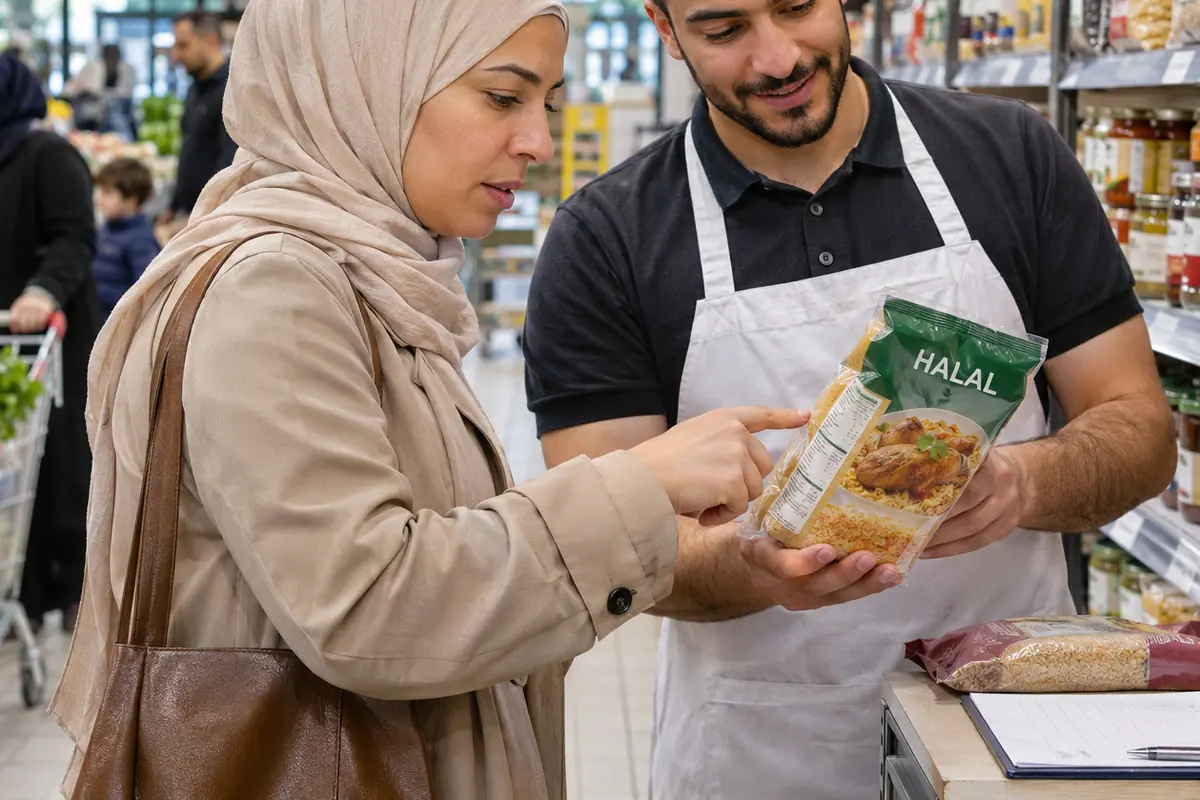
Halal grocery wholesale suppliers sell food in volume to shops, restaurants, caterers, schools and community groups, rather than to the passing shopper. Their catalogues typically cover frozen and fresh meat, rice, flour, oils, spices, canned goods, dairy and sweets, all sourced from certified producers. Buyers compare products and prices by case or pallet, minimum order size, delivery coverage and paperwork. A reliable wholesaler provides invoices, traceable batches and certificates on request, because retailers who resell halal goods answer to their own customers for every claim made on the shelf.
Halal grocery wholesale suppliers: who they serve
The main clients are independent grocers, halal butchers, takeaways, restaurants, canteens and event caterers. Some wholesalers also accept mosques, charities and large families that organise celebrations. Each type of buyer has different requirements for pack size, storage and payment terms.
Wholesalers differ in focus. A few specialise in frozen meat and poultry, others in dry goods and imports, and some run broad cash and carry operations that carry many categories. Knowing what a supplier does best avoids paying for services that a business will not use.
Newly opened shops often start with a wholesaler that offers small minimums and a wide catalogue, then add specialist suppliers as their customer base grows. This staged approach keeps early risk low while the owner learns which lines sell quickly in the neighbourhood.
Products wholesalers typically stock
Core lines include whole chickens, portioned poultry, lamb carcasses and cuts, beef, minced meat and processed items such as burgers, sausages and kebab cones. Dry goods fill large sections: basmati and other rices, lentils, chickpeas, flour, sugar, tea, oils and tinned tomatoes.
Imported items from South Asia, the Middle East, North Africa and Southeast Asia broaden the range. Spices, pickles, sauces, snacks, sweets, canned fish and beverages arrive in cases, often labelled in several languages.
Dairy and chilled goods, such as yoghurt, paneer, halloumi and ghee, round out the offer. Delivery of these items needs refrigerated vehicles, which limits the radius for some suppliers.
Packaging varies from one supplier to another. Rice may come in small sacks or in bulky bags, oil in tins or drums, and frozen meat in cartons of fixed weight. Choosing formats that match storage space and sales speed matters as much as the quoted price.
How prices work: cases, pallets and trade terms
Wholesale pricing is quoted per case, per carton or per kilo for loose items, and buyers compare on a per-unit basis. Volume tiers lower the price as order size rises, and some suppliers publish a different rate for regular accounts than for occasional buyers.
Payment terms influence real cost. Credit accounts, weekly settlement and early payment discounts change cash flow, while delivery fees, fuel surcharges and pallet charges can add to the bill. A clear quote that itemises these elements prevents confusion later.
Market conditions also play a part. Prices of meat, oil and grain move with supply, currency and demand, so wise buyers ask how long a quote holds and whether the supplier will agree to fixed rates for a trial period.
Comparing the landed cost, which combines product price, delivery and any handling charges, gives a truer figure than the catalogue price alone, particularly when two suppliers use different delivery thresholds.
Delivery methods, schedules and cold chain
Delivery models include scheduled rounds on set days, next-day orders from an online portal and collection from a depot. Refrigerated and frozen vehicles carry perishable goods, with temperature records available from better-organised firms.
On receipt, a shop should check temperatures, date codes and packaging integrity before signing. Damaged cases, thawed frozen items or missing labels are best noted on the delivery paperwork, which makes later claims easier to settle.
Drivers' notes and delivery windows deserve attention. A narrow window helps shops that receive goods during quiet hours, while a flexible one may suit suppliers covering large areas. Agreeing a routine early reduces missed deliveries and spoilage.
Halal certification and traceability in the supply chain
A serious supplier can show the certificate for each major product, name the certifier and explain which stages the certificate covers. For meat, this includes slaughter and processing sites, while for manufactured goods it extends to ingredients and production lines.
Traceability tools such as batch numbers, supplier lists and cold chain logs help if a problem arises. A buyer who asks for these documents at the outset is more likely to find gaps early, rather than after a customer complaint.
Mixed warehouses should be asked about segregation. Halal and non-halal goods stored near each other need clear separation and cleaning routines, and the supplier should be able to describe them.
Documentation should be kept in an accessible folder. Certificates, invoices and supplier details support answers to customer questions and to inspectors from local authorities, who may ask for proof of sourcing during a routine visit.
Comparing suppliers: a checklist for buyers
A practical checklist covers certification, product range, minimum order, delivery area, payment terms, returns policy, reliability and communication. Requesting sample quotes from two or three suppliers reveals how much prices differ and how quickly each firm replies.
Reputation counts. Other shop owners, local community groups and trade associations often share experiences, and a visit to a depot shows how goods are stored and handled. Small trial orders reduce risk before committing to bigger volumes.
Contract terms differ in tone and detail. Some suppliers ask for a written agreement with notice periods, others rely on a simple account application, and it pays to read cancellation, price change and complaints clauses before signing anything.
Cash and carry, online portals and direct importers
Cash and carry depots let buyers walk the aisles, inspect goods and take them away immediately, which is useful for urgent restocking. Entry may require a trade card or proof of business status, and prices are best compared with delivered alternatives.
Online portals give access to complete catalogues and order histories, with repeat baskets that save time. Direct importers sometimes sell to shops at lower unit prices but expect larger quantities and longer lead times, so storage space and cash flow need planning.
Regional distributors form a middle path. They buy in bulk from importers and producers, then deliver smaller consignments to local stores, which suits businesses that cannot commit to pallet-sized purchases.
Group buying schemes among independent grocers have become a quiet strength of the trade. By pooling orders, members reach the quantities that unlock better rates, and they share the risks of testing new product lines from unfamiliar producers.
Planning orders, stock rotation and waste control
Good stock management keeps cash from sitting on shelves. First in, first out rotation, clear date labels and weekly counts prevent expired goods, particularly for fresh and frozen items. Seasonal peaks around festivals call for earlier orders and extra freezer space.
Shops that track their best sellers adjust purchases accordingly, reducing the number of slow lines. Sharing orders with nearby businesses, or negotiating a mixed pallet, can bring down per-unit costs without forcing a single shop to hold too much stock.
Energy and space matter in the background. Freezers, chillers and dry storage all consume resources, so a shop that tracks how quickly products leave the shelf can decide whether a bulk offer truly saves money or simply moves the cost into electricity and waste.