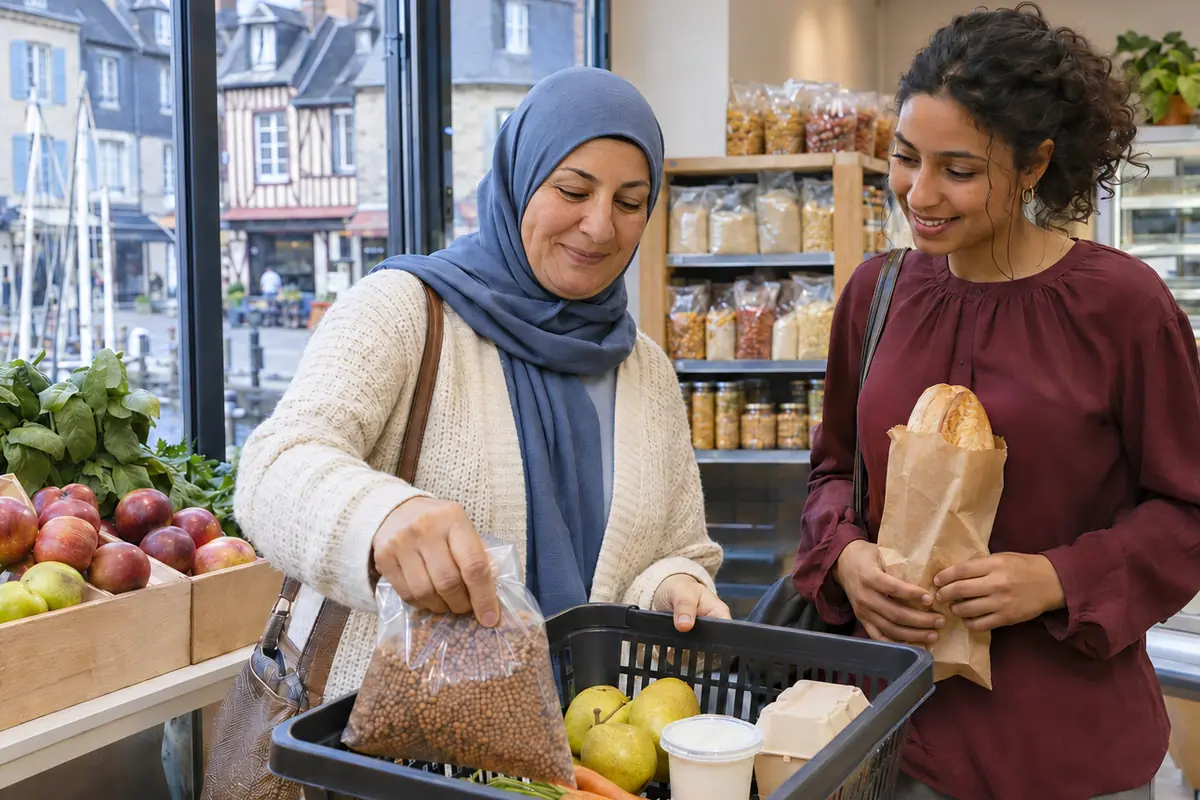
On the south coast of the UK, Portsmouth is a densely built island city, and its halal supermarket scene reflects that compact geography. Independent grocers and butchers cluster around Fratton Road, Kingston Road and Somerstown, while larger stores serve Commercial Road, Cosham and the retail parks beyond the harbour. Service families, students, port workers and long-established communities in Portsmouth pick up halal lamb, chicken, rice, spices and frozen items, set prices and promotions side by side, and read the certification marks before going home over the bridge or along the seafront.
An island city with short distances
Portsmouth sits mostly on Portsea Island, joined to the mainland by a handful of road bridges. Housing is dense, and most residents live within a short bus ride of several shops. That compactness means small grocers survive beside the big retailers, supported by customers who walk in daily.
Fratton, Somerstown, Buckland and Stamshaw hold much of the traditional terraced housing, and ground-floor shops fill the corners of those streets. Halal customers often know exactly which counter sells the best chicken or the freshest bread, a loyalty that built the reputation of several family businesses.
Weather also plays a part. Sea breezes and winter rain encourage shoppers to batch their purchases and carry them in sturdy bags, while summer brings visitors and day-trippers who add pressure on shops near the seafront and the ferry port.
Halal supermarket choices around Fratton and Commercial Road
Fratton Road is the main spine for diverse food retail, with grocers, bakeries and butchers serving Bangladeshi, Pakistani, Arab, African and Eastern European households. Its mix gives the area a lively daytime rhythm and a good chance of finding a missing spice or flour within a few doors.
Commercial Road, the central shopping street, hosts the larger chain stores and the covered centre. Their halal-labelled meat and international aisles suit those who prefer one stop with bus links, and the proximity of the railway station makes it easy for commuters to pick up supplies.
Away from the centre, retail parks near Farlington, Cosham and Port Solent provide parking and wider ranges. Shoppers often decide between a short local walk for freshness and a car trip for volume, depending on the size of the household and the day of the week.
Buses run frequently between the island's neighbourhoods and the mainland retail areas, and many shoppers pair a bus ride with a wheeled bag. Those carrying frozen goods tend to shop last on the route, so items stay cold until the front door.
Halal groceries for naval families, students and locals
Portsmouth's naval base and dockyard bring service families and civilian workers from across the country, some of whom follow a halal diet and shop around shift patterns. Shops that open early and close late are valued, and clear labelling helps people new to the area find what they need quickly.
The University of Portsmouth fills the city with international students each autumn. Their baskets feature rice, lentils, frozen chicken, spices, fresh vegetables and tea, and shared kitchens in Southsea and Fratton drive demand for compact packs and reasonably priced bulk items.
Long-settled families build weekly routines around larger shops. Lamb joints, mince, flour, ghee, yoghurt and tinned pulses fill the trolley, and the occasional fish purchase from the nearby coast adds variety. Many cooks mix local seafood with South Asian and Middle Eastern recipes.
Southsea, Albert Road and the seafront side
Southsea has a more bohemian mood, with independent delis, bakeries and cafés along Albert Road and Elm Grove. A few grocers and convenience stores stock halal-labelled items, and vegetarian and vegan ranges make shopping easier for people avoiding meat of uncertain origin.
Seafront visitors in summer rely on kiosks, cafés and supermarkets for picnic supplies. Fruit, bread, cheese, salads and drinks are easy to find, while halal meat requires a short trip to Fratton or a larger store on the main roads.
Ferry passengers heading to the Isle of Wight or the continent often stock up before sailing. Packed meals, snacks and fruit sell well near the port, and travellers who need halal options benefit from planning ahead rather than relying on the terminal alone.
Prices, offers and sensible comparison
Comparing prices in Portsmouth means looking at more than a single store. Shoppers check the unit price of chicken, rice, flour and oil in two or three places, and note which shop tends to be cheaper for which product, since patterns repeat from week to week.
Offers often appear on fresh produce at the end of the day, on large packs of staple goods and around festive periods. Because promotions end quickly, the shelf label is the final word, and a screenshot of a flyer is no guarantee that the same deal remains.
Households that value convenience may accept slightly higher tags at nearby shops, while those with a car and time may shop at larger outlets. Neither choice is wrong, and many families mix both approaches to balance costs, freshness and the effort involved.
Seasonal fruit and vegetables supply useful comparison points. When a delivery is plentiful, stalls and shops often cut tags on tomatoes, peppers or citrus, and shoppers who check tags on those days can stretch a weekly budget without changing the way they cook.
Certification, slaughter information and labels
Britain leaves halal certification to independent bodies, and the shops of Portsmouth show a mixture of their logos on shelves and in windows. Regular customers get to know which symbols on a pack fit the standards they follow at home, and staff will usually explain the differences.
At the butcher's counter, questions about the supplier and about slaughter methods are part of normal conversation. Shop owners who welcome these questions usually keep records and can explain how the meat travels from the abattoir to the display cabinet.
Ingredient reading remains essential for processed items. Gelatine, alcohol-based flavourings and some emulsifiers show up in confectionery, desserts and sauces, and careful shoppers scan the back of the pack before accepting a product as suitable for the household.
Festival seasons and port-city celebrations
Eid and Ramadan alter the pace of local shopping. Dates, dried fruit, lamb, rice, sweets and pastry sheets sell out earlier in the day, and butchers take advance orders for larger quantities. Placing an order several days before saves a last-minute scramble.
Community events in halls and mosques across the city rely on bulk buying from grocers and wholesalers. Organisers compare certification and delivery arrangements, and they usually choose suppliers who can handle sudden changes in numbers on the day.
Port-city culture adds a cosmopolitan touch to celebrations. Sailors, students and long-term residents share tables during community meals, and grocers respond with a broad range of ingredients, from Middle Eastern sweets to African spices and Asian noodles.
Delivery, online ordering and wholesale
Home delivery is widely available across the island and the mainland districts. National supermarkets offer booked slots, and halal-labelled meat can be added to a basket. Those without a car or with young children find this particularly helpful on rainy days.
Independent shops sometimes accept phone or message orders for collection, and regulars can ask staff to set aside favourite cuts before busy weekends. Building a friendly relationship with the counter staff often pays off in better service and fresher stock.
Wholesalers and cash and carry outlets in the wider Hampshire area supply caterers and community groups with bulk staples. Registration is typically required, and customers should check entry rules before travelling, since arrangements differ between sites.
Retailers and organisations to know
- Tesco — Large stores around Portsmouth with halal-labelled meat and international food ranges, plus delivery slots.
- Asda — Superstore chain with halal options in selected Hampshire stores and home delivery.
- Sainsbury's — National supermarket with local branches carrying halal-labelled meat and spice ranges.
- Morrisons — Supermarket chain offering fresh meat counters and ethnic food shelves in several southern stores.
- Booker — Cash and carry wholesaler supplying independent shops, caterers and community groups with bulk staples.
- Halal Food Authority — Certification body whose mark appears on halal meat and food sold in Portsmouth shops.