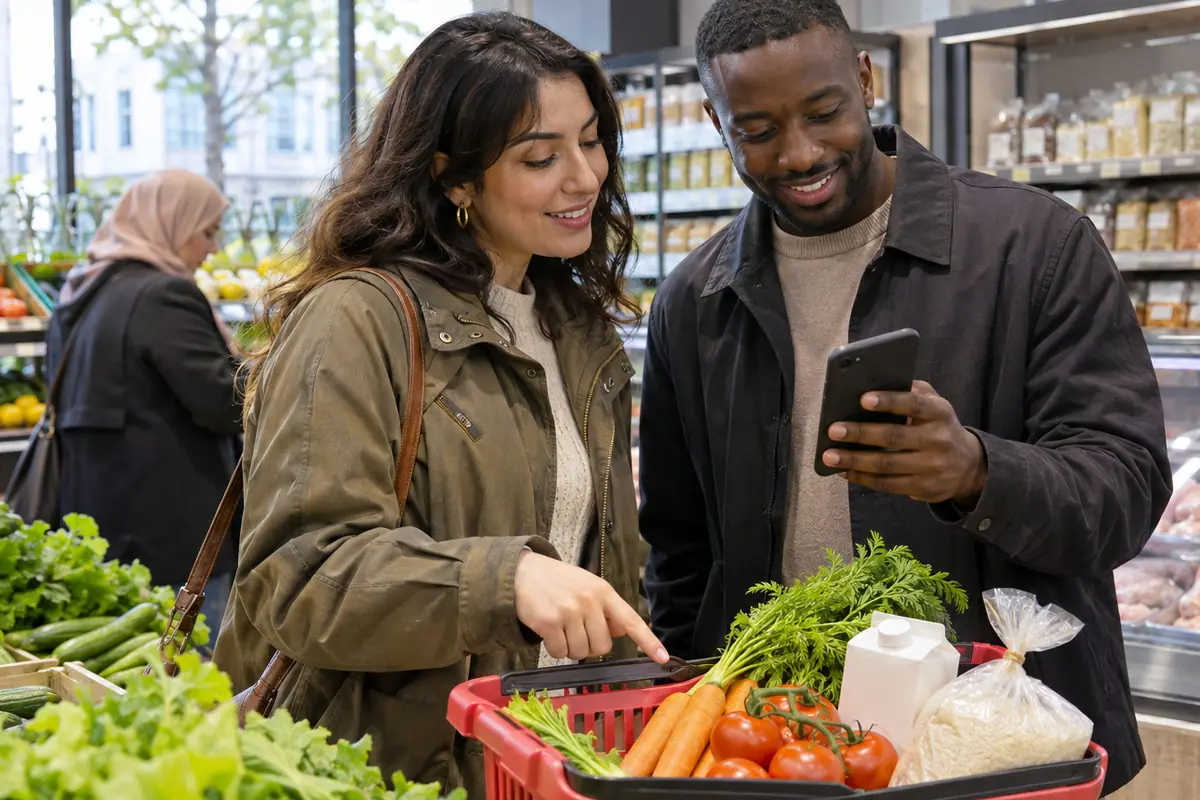
UK, Worcester is a cathedral city on the River Severn where a halal supermarket usually means a neighbourhood grocery or a mainstream store with a dedicated halal aisle. Muslim households here, many linked to the university, the hospital and local logistics work, buy halal meat, rice, pulses, spices and frozen groceries close to home. Shoppers compare prices and weekly offers between stores, and some combine local shopping with trips towards Birmingham. At the shelf, the label, the certifying body and the slaughter statement remain the points people check first.
Halal supermarket formats found in Worcester
A city of Worcester's size does not rely on one single store. Halal shopping is spread across small independent grocers, butchers with a halal counter, and national supermarkets that give shelf space to halal ranges. Each format answers a different need, from a quick top-up of spices to a full weekly basket for a large family.
Independent grocers near the central streets and the residential districts tend to focus on staples: basmati rice, lentils, chickpeas, tea, dates, tinned goods and imported sauces. Their strength is variety in ethnic ingredients, and their stock often reflects the communities living nearby, whether South Asian, Middle Eastern or African.
National chains complete the picture. Several large grocery brands operate stores around Worcester and the ring roads, and many of them carry a halal chicken or lamb range, frozen halal products and ready meals. Availability differs from one branch to another, so shoppers usually look at the chilled cabinets before planning a menu.
Halal groceries: what fills the basket
Everyday halal groceries in Worcester cover far more than meat. Fresh vegetables and herbs, flatbreads, yoghurt, ghee, cooking oils, tinned pulses, pickles and sweet treats all feature in a typical shopping trip. Many families buy dry goods in large sacks and keep fresh items for several short visits during the week.
Meat remains the most closely checked category. Chicken, lamb and beef are chosen for cut, freshness and certification, and some customers prefer to speak with a butcher about how the animal was slaughtered. Frozen halal meat, burgers and kebab products are useful for households that shop less often.
Ingredient reading matters for processed items too. Sweets with gelatine, sauces with alcohol-based flavourings or biscuits with animal fats can raise questions, so many buyers scan the ingredient panel and look for vegetarian or halal-certified marks. This habit turns a simple grocery run into a careful label review.
Comparing halal supermarket prices around the city
Price comparison is part of normal life for Worcester households, especially those feeding several people. Rather than trusting one store, shoppers watch the shelf tickets for rice, oil, chicken and fresh produce, then decide where to buy each category. The cheapest place for one item is rarely the cheapest for the entire list.
Weight and unit information is the most reliable guide. A large pack often looks cheaper than a small one, yet the price per kilo tells the true story. Reading the small unit print on the shelf label helps avoid paying more for packaging, branding or a promotional display.
Quality also enters the calculation. A lower ticket on meat is only a bargain if the cut, fat level and freshness match expectations. Many customers therefore treat the lowest price as a starting point, then check the use-by date and the certification mark before putting an item in the trolley.
Weekly offers and how shoppers read them
Offers are a regular feature of grocery retail in the Midlands. Supermarkets rotate multi-buy deals, loyalty-card prices and clearance stickers on chilled goods approaching their date. Halal lines are occasionally part of these promotional cycles in Worcester, though the selection keeps shifting and last week's bargain may already be gone.
Smart buyers look at what an offer actually saves. A multi-buy on meat is useful when the family can freeze part of it, while a discount on a fresh item is only helpful if it will be eaten in time. Planning meals around the freezer prevents waste, and writing a short list before leaving home keeps impulse purchases under control.
Independent grocers use a different style of promotion. Instead of leaflets, they may display handwritten boards or reduce prices on bulk sacks near religious festivals. These local gestures are rarely advertised widely, so regular customers who visit often tend to spot them first and share the news by word of mouth.
Buying halal meat with confidence
In the United Kingdom, halal slaughter is carried out under general animal welfare law, with certification handled by independent bodies rather than by the state. Several certifiers operate nationally, and their logos appear on packaging or on counter displays. Shoppers who care about the method learn which marks they trust.
Questions that customers often ask a butcher are simple: is the meat certified, which body supervises the slaughterhouse, and is the animal stunned or not. Honest sellers answer plainly, and they will say when a product is not covered. A hesitation is a good reason to look elsewhere.
Cross-contamination is another concern in shops that also sell pork or alcohol. Separate cabinets, separate knives and clear labelling reduce that worry. Households with strict habits often prefer a dedicated halal shop for meat while buying vegetables and dry goods from any convenient supermarket.
The geography of Worcester and everyday shopping
Worcester lies in the West Midlands, close to the M5 and within reach of Birmingham, Gloucester and the Malvern Hills. This position shapes shopping habits. Residents with a car can reach large retail parks easily, while those without rely on city-centre stores, bus routes and walking distance from home.
The river and the old street pattern make parts of the centre compact. Small shops sit close together near the cathedral area and along main roads, which suits quick errands. Larger stores on the edges give room for big weekly trips, parking and loading bulky sacks into a boot.
Students at the university add another rhythm. They tend to buy smaller quantities, ready meals, frozen halal chicken and snacks, and they appreciate late opening hours at neighbourhood grocers. Their demand supports a steady supply of convenient halal products throughout the academic calendar, and it encourages small grocers to keep spices, noodles and ready sauces within easy reach.
Home delivery and wider Midlands options
Delivery has become a practical addition for busy households. Online grocery services cover Worcester and the surrounding villages, and some halal specialists in the wider Midlands ship chilled boxes of meat, spices and dry goods. Delivery slots, minimum baskets and cold-chain handling vary, so customers read the conditions carefully.
Occasional trips to larger halal markets in the Birmingham area remain popular for celebrations. Families preparing for a feast often buy whole cuts, large trays of sweets and special ingredients in one visit, then share the load with relatives. Such trips complement everyday shopping in Worcester.
Wholesale suppliers also play a role for caterers, takeaways and community events. Cash-and-carry outlets sell halal meat and ingredients in bulk to registered trade customers, and individual buyers sometimes join them through a friend or relative who runs a business. Terms differ, so each outlet should be asked directly about membership, minimum quantities and certification of the meat on sale.
Retailers and organisations to know
- Tesco — National supermarket chain with branches serving Worcester and a halal range in selected chilled and frozen cabinets.
- Asda — Large grocery retailer whose bigger stores around the Midlands stock halal meat and world food aisles.
- Morrisons — Supermarket group with fresh meat counters and halal-labelled products in many of its stores.
- Sainsbury's — National grocer offering halal chicken and lamb lines and an online delivery service reaching Worcestershire.
- Halal Food Authority — Certification body whose logo appears on halal meat sold in butchers and shops across the United Kingdom.
- Halal Monitoring Committee — Independent certifier that supervises slaughter and labelling for halal products distributed in British shops.