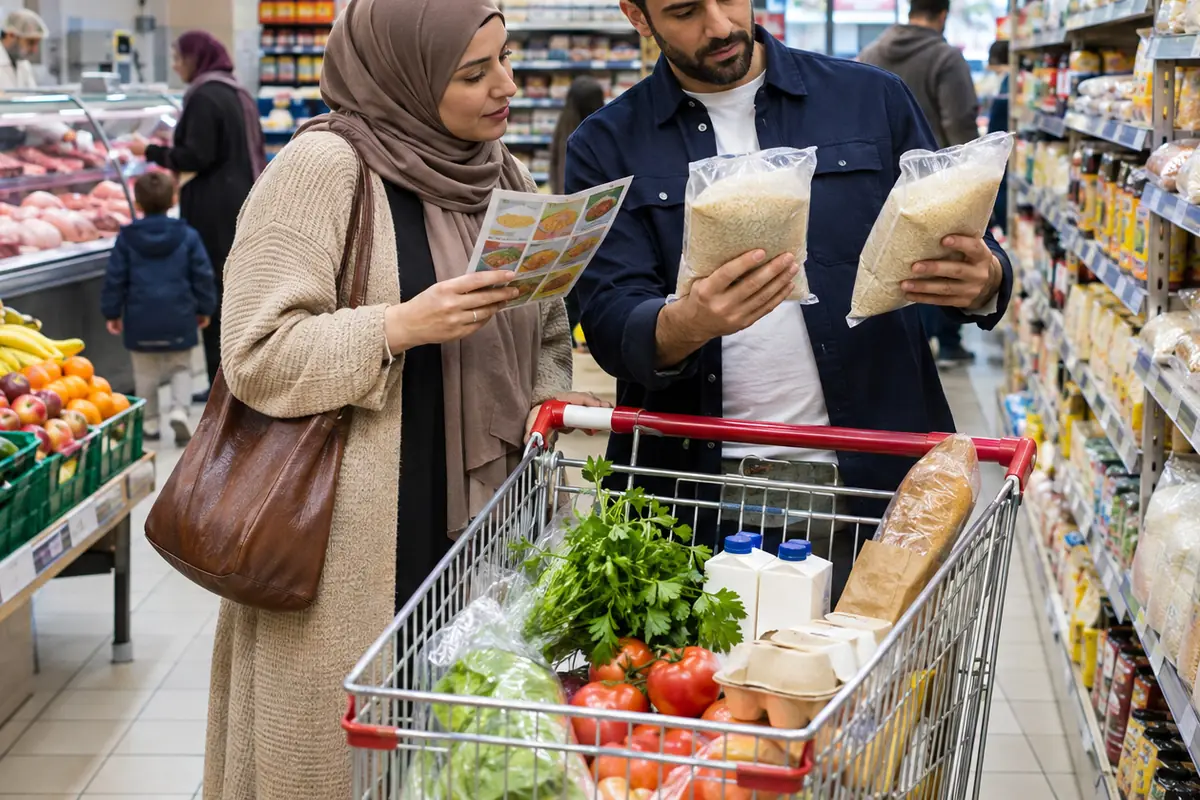
Halal supermarket meat is fresh or frozen meat sold in a large store that has been sourced from animals slaughtered according to Islamic requirements and marked accordingly. The range usually covers chicken, turkey, lamb, mutton, beef steak and minced products, displayed at a counter or in sealed trays. Shoppers choose by cut, freshness, packaging date and certifier rather than by price alone, and they pay attention to how the product is described, since a display case with a halal sign does not automatically tell the whole story about how the meat was prepared.
Halal supermarket meat: what the range usually includes
A well-stocked halal section offers whole birds, breast fillets, thighs, drumsticks and wings of chicken, plus turkey as joints, mince or escalopes. Lamb appears as shoulder, leg, chops, ribs and diced pieces, while beef is sold as steaks, mince, roasting joints and burger patties.
Smaller supermarkets may carry only a few frozen lines, while larger stores operate a full counter with staff who cut to order. The difference shows up most in lamb and beef, where fresh cuts and specific trims are harder to supply in pre-packed form.
Processed items, such as sausages, kebab meat, nuggets and meatballs, sit beside the raw cuts. They are convenient, but their ingredient lists need more checking than plain fresh meat.
Origin labelling helps too. Packs normally state the country of rearing and the processing plant, and some stores display supplier names near the counter. Comparing these details between two shops often explains why similar-looking trays carry different tickets and why one tastes noticeably better than the other.
Chicken: the everyday halal supermarket meat
Chicken is the best-selling item in most halal sections, and for good reason. It suits countless recipes, cooks quickly and offers a wide range of formats from whole birds for roasting to skinless fillets for grilling. Buying whole and portioning at home is a common way to get more from the same weight.
Quality indicators include skin that looks moist but not slimy, an absence of strong odour, and tight packaging without pooled liquid. Free-range or corn-fed labels refer to farming methods, not to halal status, so both claims should be checked independently.
For weeknight cooking, thigh meat forgives longer heat and stays juicy in curries, tagines and traybakes, whereas breast needs shorter cooking and benefits from marinades with yoghurt, lemon or spices. Matching the cut to the recipe avoids the dryness that makes many people think the chicken itself was poor.
Turkey cuts and how they differ from chicken
Turkey has a leaner profile and a milder taste. In halal ranges it is sold as crown joints, breast steaks, drumsticks, thigh meat, mince and sliced deli products. Because it dries quickly, cooking methods such as brining, slow braising or stewing keep it moist.
Around religious and family gatherings, whole turkeys are often ordered ahead from the counter. Asking the staff when fresh stock arrives, and how long a frozen bird needs to thaw in the fridge, avoids last-minute problems.
Cold cuts and sliced turkey have become popular for lunchboxes. They are convenient, but the brine, flavourings and preservatives vary, so reading the ingredient panel and the certifier name matters just as much as it does for raw cuts.
Lamb and mutton: cuts, flavour and cooking time
Lamb is central to many cuisines that rely on halal supermarkets, and a good counter will offer several cuts. Shoulder and neck suit slow stews and curries, leg suits roasting or butterflying, and chops and cutlets suit grilling. Bone-in pieces give richer flavour but need longer cooking.
Mutton, from older animals, has stronger taste and firmer texture. It rewards long, gentle cooking and spices, and some stores sell it under local or traditional names. Asking the butcher how a cut behaves in the pot helps first-time buyers choose well.
Minced lamb is a favourite for kofta, keema and stuffed vegetables. Fat content differs between producers, so looking at the label or asking for a leaner mince is worthwhile if the recipe calls for it.
Steak and beef cuts for the grill, pan and oven
Halal steak includes sirloin, rump, ribeye and, in some stores, fillet. Prices rise with tenderness, which leads many households to use cheaper cuts such as chuck, brisket or shin in long braises, saving premium steak for special occasions.
Marbling, colour and thickness reveal much about the eating quality. A steak that is deep red with fine flecks of fat generally cooks better than a pale, thin cut. Resting the meat after cooking helps it keep its juices.
Beef mince and burgers are staples for quick meals. Buying plain mince and shaping burgers at home gives control over seasoning and avoids the extra additives sometimes found in ready-made patties.
Many shoppers ask the counter to slice steak to a chosen thickness or to prepare strips for stir-fries and fajitas. This is cheaper than buying pre-marinated trays, and it lets the cook decide on salt, spice and sauce levels from the outset.
Reading labels, certification and slaughter information
The label should say who certified the meat and, where possible, how the slaughter was carried out. Some shoppers also ask whether the animal was stunned before slaughter, as practices and opinions differ among certifiers and communities, and clear information helps each buyer follow their own standard.
Labels for mixed products deserve extra care. A packet marked halal for the chicken may contain a sauce or coating that includes alcohol or gelatine. Counter staff can usually point to supplier documents if the written details are thin.
Frozen imports sometimes carry labels from the country of production in other languages. A knowledgeable retailer will translate the certifier name and confirm its recognition locally, and shoppers who want extra assurance can look up the certifier before buying again.
Freshness, storage and safe handling at home
Raw meat should travel home quickly, ideally in an insulated bag during warm weather. At home, it belongs on the lowest fridge shelf in a covered container, away from cooked food and salad items. Poultry should be cooked within the use-by date or frozen well before it.
Freezing in meal-sized portions saves time and limits waste. Wrapping tightly, labelling with the date and thawing overnight in the fridge are simple habits that protect quality and safety.
Separate chopping boards and thorough handwashing reduce the risk of cross-contamination, especially with chicken and turkey, which can carry bacteria that heat will destroy but that spread easily on surfaces.
Cooked meat deserves its own rules. Leftovers should cool quickly, go into the fridge within a short time and be reheated until steaming hot all the way through. Rice and poultry dishes in particular should not sit at room temperature for long periods.
Value, promotions and choosing a trustworthy counter
Value depends on yield, not just ticket price. Bone-in cuts, fat trimming and cooking loss all change how much edible meat ends up on the plate. Comparing the cost per portion gives a fairer picture than comparing cost per kilo alone.
Promotions on family packs and frozen bags are common, and they suit shoppers who have freezer space. A trustworthy counter keeps clean displays, rotates stock, answers questions about origin and does not hesitate to show certificates when asked, which are signs worth noting before settling on a regular supplier.
Seasonal price swings are normal. Lamb tends to attract demand around festivals and in spring, while poultry stays steadier throughout the year. Watching these patterns helps households plan bulk purchases and choose substitute cuts when favourites become expensive.