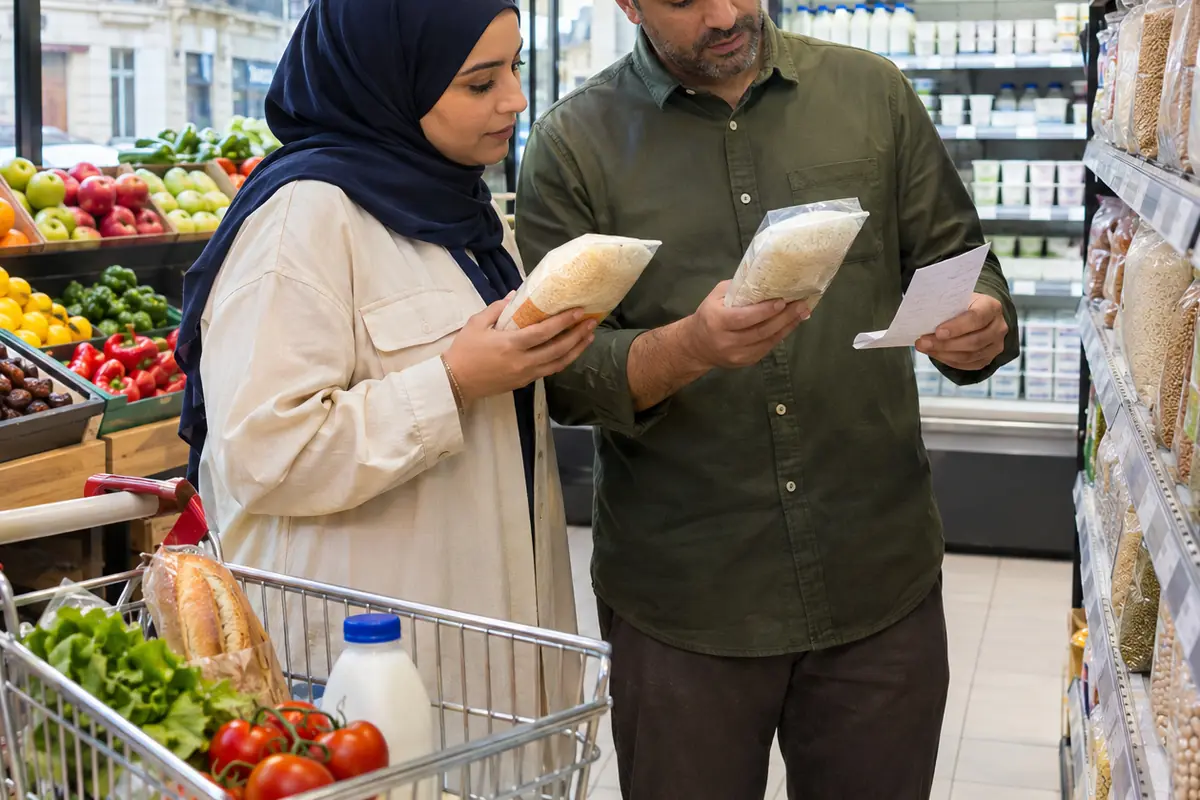
In Egypt, a halal supermarket is rarely a separate category, because most food sold in a country with a Muslim majority is expected to follow Islamic rules. Shoppers in Cairo, Alexandria and the Delta towns buy from hypermarkets, neighbourhood grocers, open-air markets and delivery apps, and they compare prices, offers and freshness rather than the basic question of halal status. Attention shifts to imported products, processed foods and meat sourcing, where labels and the reputation of the seller carry the most weight.
What halal supermarket shopping means in Egypt
Because the population is overwhelmingly Muslim, halal is the default assumption in Egyptian food retail. Butchers, bakeries and supermarkets operate on that basis, and the vocabulary of shopping focuses more on freshness, origin and price than on a special halal aisle.
Questions arise mainly with imported goods, frozen meat and processed items. Shoppers read the packaging for the slaughter statement, the importer's details and the ingredient list, looking for gelatine, alcohol-based flavourings and animal fats of unclear source.
Shops serving foreign residents and tourists, mainly in certain districts of Cairo and in resort areas, may sell items that are not intended for Muslim customers. Such products are normally kept apart and clearly signposted for those who do not wish to buy them.
Hypermarkets and supermarket chains in Egyptian cities
Large chains such as Carrefour, Spinneys, Hyper One and Seoudi operate in Greater Cairo, Alexandria and other major cities. Their stores combine fresh produce, bakery, meat and dry goods under one roof and appeal to families who prefer a single weekly trip.
Smaller supermarket formats are spread through residential districts, offering convenience and often home delivery by phone or app. Their ranges are narrower, yet they handle daily needs such as bread, dairy, eggs and cooking oil quickly.
Shopping malls house many of the larger stores, so a grocery trip can be combined with other errands. Parking, air conditioning and queue length influence which store a family chooses as much as the shelf price.
Cooperative-style outlets and discount formats also attract budget-minded households. They stock a limited range of staples in plain packaging, and shoppers accept fewer brand choices in exchange for lower prices on everyday items such as oil, pasta, tea and flour.
Neighbourhood grocers, butchers and street markets
The traditional grocer, known for dry goods, cheese, pickles and olives, remains central to daily life. Neighbourhood relationships often include informal credit and home delivery by a local boy, which large stores cannot easily match.
Butchers sell beef, buffalo, lamb and poultry, often prepared in view of the customer. Many Egyptians choose a butcher over a supermarket counter for the sense of personal trust and the ability to specify the cut.
Weekly souks and permanent markets sell vegetables, fruit, spices and herbs, usually at lower prices than packaged equivalents. Haggling remains part of the experience, and regular buyers know which stalls offer the freshest goods on which day.
Fishmongers and poultry shops complete the street. Alexandria and the coastal towns are known for seafood, while inland districts favour live or freshly dressed birds. Shoppers judge quality by smell, colour and the cleanliness of the stall, and they return to sellers who treat them fairly.
How grocery prices and offers vary across Egypt
Egyptian food prices respond quickly to exchange rates, import costs and seasonal supply, so a comparison made last month may not hold today. Shoppers rely on current shelf labels and on checking two or three outlets before a large purchase.
Hypermarkets run promotional campaigns on staples such as rice, sugar, tea, oil and pasta, often presented as packs or bundles. Comparing the price per kilogram or per litre reveals whether a bundle really saves money compared with the individual items.
Subsidised goods form a separate category in daily life, sold through designated outlets under rules set by the authorities. Households combine those purchases with commercial supermarkets, which offer wider choice, longer opening hours and a more comfortable shopping environment.
Neighbourhood differences are significant. Upscale districts typically show higher prices on imported and branded goods, while popular quarters offer cheaper local products and larger quantities of fresh produce sold loose.
Ramadan and festival shopping in Egypt
Ramadan transforms grocery shopping. Dates, dried apricot paste, nuts, sweets, vermicelli and lanterns fill the entrances of stores, and families buy in larger quantities for iftar tables and charitable food boxes.
Chains and food companies launch special campaigns and Ramadan packages, often including staples such as rice, oil, sugar and pasta. Shoppers compare contents of these boxes carefully, since the value depends on brands and quantities rather than on the headline.
Eid al-Adha brings a different pattern, with demand for fresh meat and the distribution of sacrificial portions to relatives and neighbours. Butchers take orders in advance, and arrangements for cutting, packing and freezing are agreed beforehand.
Charitable giving is part of the season. Many shoppers add extra items to their trolley for neighbours or donation drives, and some stores collect food parcels at the checkout, which encourages customers to compare contents and prices before giving.
Labels, imports and certification of halal food
Imported products, from frozen meat to biscuits and sauces, usually carry a certificate from the exporting country's recognised halal body. Shoppers look for the logo of a known organisation and for Arabic labelling that includes ingredients and an expiry date.
Egypt's food safety regulator oversees import controls and labelling requirements, but the practical check at the shelf is done by the customer. Reading the list of additives, fats and flavourings helps avoid products whose composition is unclear.
For locally processed foods such as canned beans, cheese, sausages and ready meals, trust in the brand and the manufacturer plays a larger role than a separate halal mark, because the production chain is domestic and familiar.
Tourist areas and expatriate neighbourhoods sometimes feature international brands alongside local ones. Visitors who follow a halal diet ask staff about meat, gelatine and alcohol in sauces, and larger stores usually answer in English as well as Arabic.
Typical Egyptian staples at the supermarket
Staple shopping lists revolve around rice, pasta, lentils, fava beans, tea, sugar, cooking oil, cheese, eggs and bread. Fuul medames and ta'amiya ingredients, along with molokhia, okra and tomatoes, make up the backbone of many household menus.
Frozen and chilled aisles include poultry, minced meat, vegetables for stews and ready-made pastries. Families often buy larger quantities when prices are favourable and freeze portions for use during busy periods.
Spice stalls and the grocery shelf offer cumin, coriander, cardamom and dukkah blends. Buying small quantities of loose spice from a trusted seller keeps flavour strong, whereas supermarket jars appeal for convenience and consistent packaging.
Delivery apps, online grocery and practical habits
Delivery platforms have grown quickly in the big cities, connecting customers with supermarkets, groceries and butchers. Minimum order values, service fees and delivery windows differ, so comparing two apps before an important order is sensible.
Checking the expiry date, the condition of packaging and the cold chain on arrival matters more online than in a shop, because a customer cannot inspect goods before purchase. Reputable providers accept returns of damaged or spoiled items.
Many households blend channels, buying fresh produce and meat in person and ordering heavy staples online. That mix usually gives a good balance between cost, freshness and the time saved on busy weekdays.
Retailers and organisations to know
- Carrefour Egypt — Hypermarket and supermarket chain with stores in Greater Cairo, Alexandria and other cities, plus online ordering.
- Spinneys Egypt — Supermarket chain with a focus on fresh produce, butchery and bakery in upscale and residential districts.
- Hyper One — Large-format hypermarket offering a wide grocery selection for families in the Cairo area.
- Seoudi Market — Egyptian supermarket chain known for fresh meat and produce departments and own-brand products.
- Talabat Egypt — Delivery application linking customers with supermarkets and grocers in major Egyptian cities.
- Breadfast — Egyptian online grocery service delivering fresh bread, produce and household staples in Cairo.