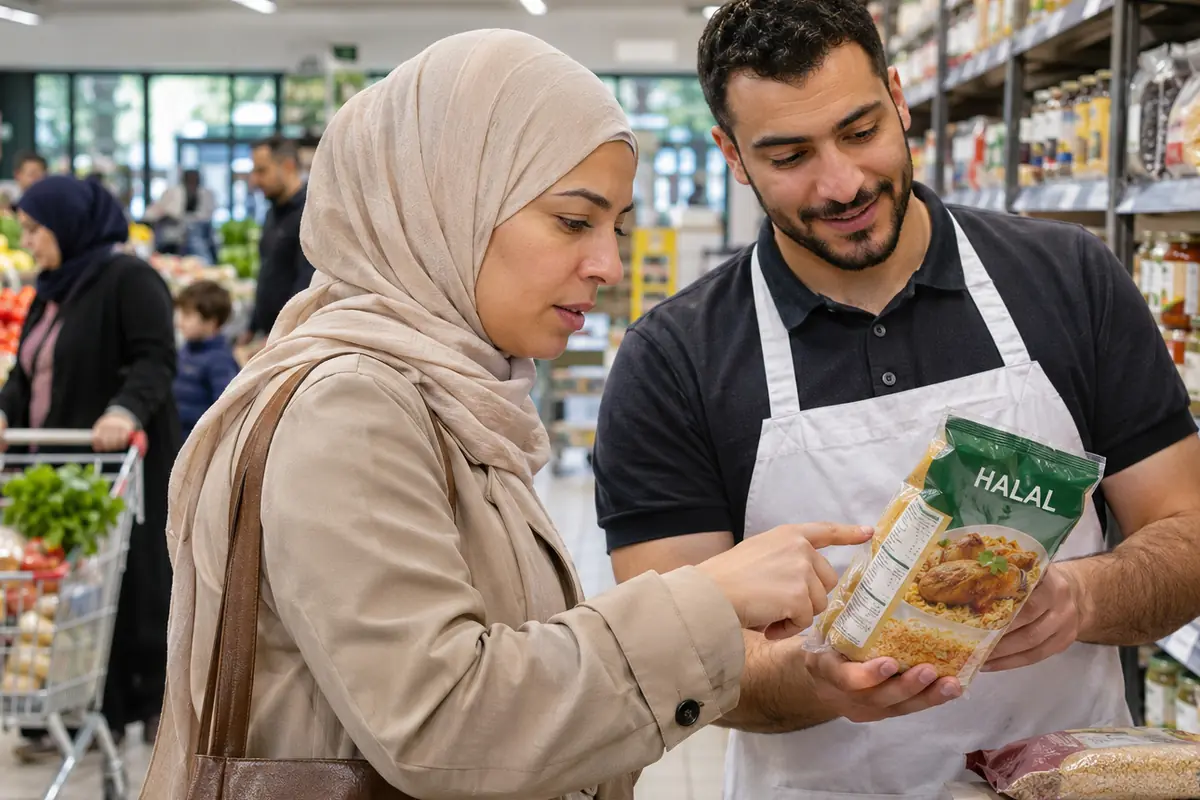
In the UK, Glasgow's halal supermarket scene mixes national chains with independent grocers that serve a long-established South Asian community and a growing student population. Shoppers look for halal meat and poultry, rice, lentils, spices, frozen snacks and dairy under one roof, often with a dedicated counter or chilled section. Groceries are bought in small neighbourhood shops as well as large out-of-town stores, and prices and special offers vary by retailer, so checking the label and the shelf ticket remains the most reliable habit.
Halal supermarket choices across Glasgow
Glasgow shoppers can buy halal food in three broad kinds of store. The first is the national supermarket with a halal fresh meat counter or packaged halal chicken and lamb. The second is the independent grocer that stocks the full range of South Asian and Middle Eastern staples. The third is the cash and carry that also welcomes private customers.
National chains such as Tesco, Asda, Morrisons and Sainsbury's all operate in and around the city, and each decides which of its branches carry halal lines. Branch ranges differ, so a store in a densely populated neighbourhood may offer far more halal meat than a retail park shop on the edge of town.
Independent halal shops tend to concentrate where the community is largest, which makes the south side of the city a natural starting point. Many combine a butcher's counter, a fruit and vegetable display, bakery items and household goods, so a single visit covers most of the weekly shopping list.
University districts in the west end and near the city centre add another layer, because students from many countries look for familiar ingredients at affordable shelf prices. Smaller convenience shops there stock halal ready meals and snacks for people with limited kitchen time.
Pollokshields, Govanhill and the south side
South of the Clyde, streets around Pollokshields, Govanhill and neighbouring districts hold a dense cluster of grocers, bakeries and butchers serving Muslim households. Walking these streets, shoppers pass shops selling fresh produce in crates on the pavement, sacks of rice stacked inside and chilled cabinets filled with marinated meat.
Because these neighbourhoods are compact and well served by buses and trains, many residents shop on foot and buy little and often. That pattern favours small grocers, where staff know regular customers and can say where the meat comes from and which certifying body stands behind it.
Govanhill in particular is known for its mix of communities, so shelves carry products from Pakistan, India, Eastern Europe and the Middle East side by side. That variety helps cooks who want specific brands of flour, ghee, tinned pulses or pickles that larger chains rarely stock.
Festival periods change the rhythm of these streets. Before Eid, butchers take advance orders for larger cuts, bakeries fill trays with sweets, and queues form early in the day. Anyone planning a family gathering is usually advised to reserve meat with the shop several days ahead.
Halal groceries beyond meat: staples, frozen and dairy
Halal groceries cover far more than fresh meat. Rice in large bags, chickpeas, red and green lentils, tinned tomatoes, cooking oils, flatbreads, spice blends and ready-made sauces fill most of the shelf space in a typical Glasgow shop. Shoppers still read ingredient lists, since gelatine, alcohol-based flavourings or animal fats can appear in unexpected products.
Frozen aisles matter a great deal for busy households. Samosas, parathas, kebabs, battered fish and breaded chicken pieces are common choices, and freezer space often decides how much can be bought during a promotion. Checking that the frozen item carries a recognised halal mark is part of normal shopping routine.
Dairy and sweet items attract careful reading as well. Cheese may use animal rennet, and desserts or sweets can contain gelatine. Many families therefore keep a short list of trusted brands and look for vegetarian or clearly marked halal alternatives when buying something unfamiliar.
Reading halal labels and certification marks
In Britain there is no single national halal standard, so several independent bodies certify food. Glasgow shoppers regularly spot the Halal Food Authority mark among the labels on shelf packaging. A shop that displays a certificate or labelled packaging gives shoppers something concrete to check instead of relying only on verbal assurance.
Slaughter method is the point many buyers care about most. Some certifiers accept pre-stunning under defined conditions, while others do not, and the packaging or the counter staff can usually explain which approach applies. Shoppers with a firm preference simply ask and choose the supplier that matches it.
Scotland's food standards are overseen by Food Standards Scotland, which handles general hygiene and labelling rules rather than religious certification. A halal claim is therefore a matter of trust in the certifier and the retailer, which is why recognised logos and clear supplier names carry weight.
Comparing prices and spotting offers on the weekly shop
Prices for halal products differ from one retailer to the next, and no single chain is cheapest across every category. A sensible method is to compare the unit price printed on the shelf ticket rather than the headline figure, particularly for rice, chicken and oil, where pack sizes vary widely.
Offers appear in several forms: multi-buy deals on staples, reduced chilled meat close to its date, loyalty-card pricing at the national chains and weekly specials chalked up in independent shops. Which promotions run depends on the retailer, so it pays to look at current leaflets and in-store signs before filling a trolley.
Discount supermarkets such as Aldi and Lidl have a growing presence in Scotland and are often used for general groceries, while halal meat is more commonly bought from a butcher or a specialist store. Splitting the shop between the two can keep a household budget under control.
Cash and carry, bulk buying and large family orders
Families that cook for many people, and small restaurants or takeaways, often buy in bulk. Wholesalers such as Booker operate across the country, and Glasgow also has independent cash and carry warehouses in its industrial estates, where sacks of rice, cartons of oil and trays of chicken are sold in trade quantities.
Bulk buying works best when freezer space and storage are available. Large bags of flour or lentils last for months in a cool cupboard, whereas fresh meat needs to be portioned and frozen quickly. Many households share a big purchase with relatives to avoid waste.
Trade access rules differ between wholesalers, with some requiring a business account and others admitting members of the public. Checking entry conditions by phone or on the retailer's website before travelling avoids a wasted journey to an estate outside the centre.
Delivery, online ordering and shopping around Glasgow's weather
Glasgow's wet and windy climate makes home delivery appealing, especially for heavy items like sacks of rice and multipacks of drinks. Ocado, Tesco, Asda and Sainsbury's all offer online grocery services in the Glasgow area, and shoppers can filter for halal items where the retailer has tagged them.
Substitutions deserve attention. If a halal product is out of stock, an automatic replacement may be a non-certified alternative, so many customers choose the setting that disallows substitutes or check the delivered items against the order before cooking.
Students at the city's universities and busy working families often combine approaches: a weekly online order for staples and a quick walk to a local halal grocer for fresh bread, herbs and meat. The combination saves time without giving up the freshness that independent shops provide.
Retailers and organisations to know
- Tesco — National supermarket with halal packaged meat and South Asian ingredient ranges in many Glasgow branches, plus home delivery.
- Asda — Large-format stores around Glasgow stocking halal chicken, lamb and world food aisles, with an online grocery service.
- Morrisons — Supermarket chain with fresh meat counters in larger stores and halal lines in selected branches.
- Booker — Wholesaler serving caterers and small shops, a source of bulk rice, oil and frozen goods.
- Halal Monitoring Committee — British certification body whose mark appears on halal meat and food sold in shops across the UK.
- Halal Food Authority — Independent certifier that inspects abattoirs and food producers supplying British retailers.