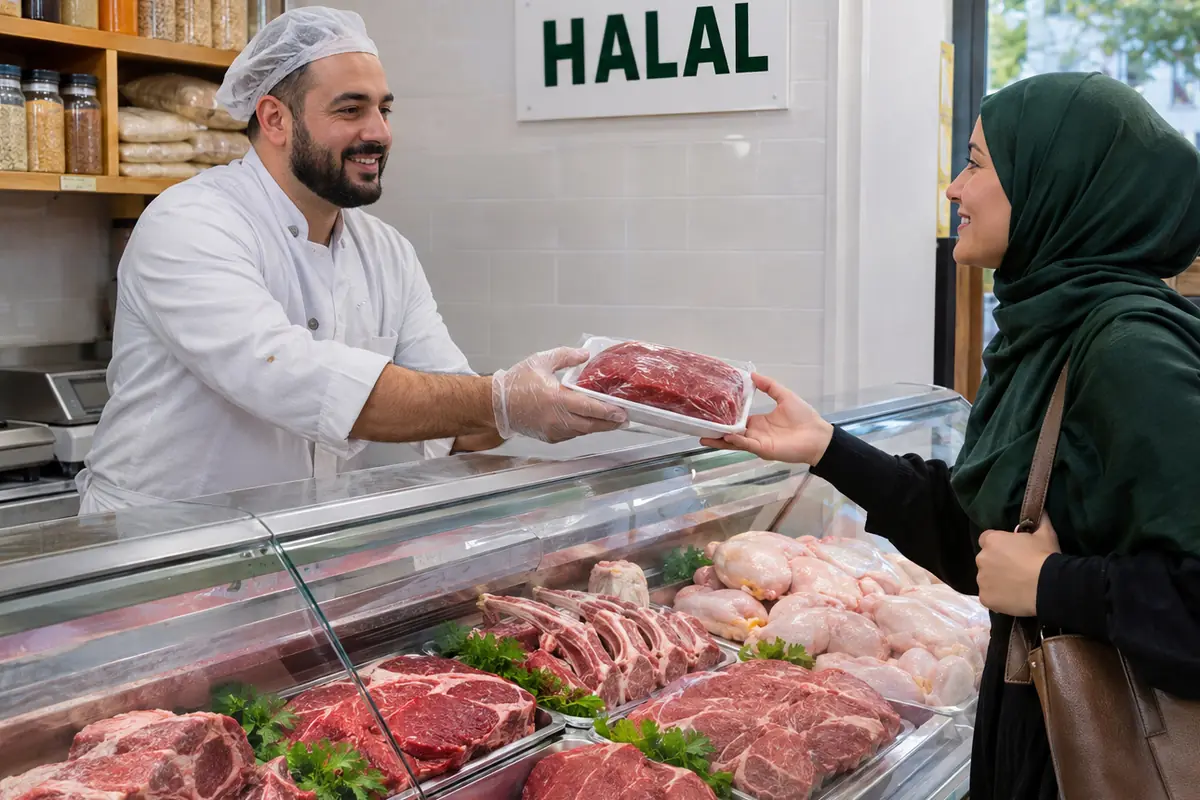
UK, Exeter, the Devon cathedral city, has a modest but steady halal supermarket offer built around its university community, its hospital and a small, settled Muslim population. Exeter shoppers looking for a halal supermarket will find religiously prepared meat next to staples such as rice, chickpeas, herbs and spices, fresh bread, yoghurt and frozen ranges kept free of pork and alcohol. Specialist shops are few, so households combine chain stores, small international grocers and delivery, and they watch prices and offers closely. For wider choice, many drive toward Plymouth, Bristol or Taunton from time to time.
Finding a halal supermarket in Exeter
Halal shopping in Exeter is shaped by the size of the city. Instead of long streets lined with specialist stores, residents find a few independent grocers and international food shops, mostly close to the centre, St Thomas and Heavitree, plus the halal lines stocked by the large chains.
Sidwell Street and the roads leading toward the university have convenience stores that carry spices, rice and canned pulses. Because choice is narrower than in a large city, regular customers learn which shop reliably stocks each item and plan accordingly.
Exeter's compact centre, with Princesshay, the Guildhall shopping area and the quayside, is easy to cover on foot or by bike. The Saturday and Friday markets bring extra produce stalls, handy for cooks who buy vegetables, herbs and eggs loose before heading to a grocer for dry goods.
Halal supermarket ranges in chains around Devon
Tesco, Sainsbury's, Morrisons, Aldi, Lidl and Waitrose operate across the Exeter area, and a few of the bigger branches keep halal chicken or lamb in the chilled aisles. Stock changes with local demand, so the range may look sparse outside term time.
Marks and Spencer food halls and Waitrose are more useful for fruit, dairy, bread and ready dishes than for halal meat. A common solution is a split shop: general groceries at a chain, meat from a specialist, and spices from an international store.
Retail parks at Marsh Barton, Sowton and Alphington Road offer large car parks and longer hours, useful for families who come from outlying villages. A trip there is often combined with errands, which lowers the effective cost of reaching a bigger store.
University life and student shopping
The University of Exeter brings in students from Malaysia, the Gulf, Pakistan, Nigeria and many other countries. Their shopping habits drive demand for halal chicken, rice, noodles, tinned fish and frozen vegetables, and they often shop in groups to share transport.
The student calendar produces peaks at the beginning of the academic year and before holidays. Shops that know this pattern prepare for it, and students learn to buy staples in the first weeks before shelves empty or popular brands run short.
Staff and patients at the hospital and the Met Office employees add to the mix of shoppers. They tend to appreciate longer opening times and ready-prepared halal meals that can be reheated after a late shift.
Halal meat from local butchers and farm shops
Devon is farming country, and some shoppers wonder whether local lamb or poultry can be bought halal. Certain butchers and farm suppliers cater to this, though availability varies, and it is wise to ask directly about slaughter practice and certification before ordering.
A phone call to a butcher a few days ahead often secures the right cut, particularly for festivals and family gatherings. Because supply chains for halal meat in the South West are thinner, advance notice helps both the shop and the customer.
Whole-animal orders for celebrations are sometimes arranged through suppliers who travel from larger cities. Households may share a delivery, split the cuts and store them in home freezers, spreading cost and effort across several families.
Certification marks and reading the label
In England, shoppers usually look for the logo of a certification body on the pack, and for a statement about slaughter on meat products. A visible mark gives reassurance, and an unclear or missing one prompts a question to staff or a different choice.
Ingredient lists need the same care for processed foods. Gelatine, lard, certain emulsifiers and alcohol-based flavourings can appear in biscuits, sauces, desserts and ready meals, and vegetarian-labelled products often provide a simpler route.
Spices and tinned goods weigh little and keep for months, so they travel well when brought from a larger city. Many Exeter households keep a standing list and ask visiting relatives to carry certain items on return journeys.
When a label is unclear, a quick question to the manager is better than a guess, and a vegetarian option is always a safe fallback.
Comparing prices in a regional city
Smaller choice means smaller differences, but comparison still pays. Looking at unit prices per kilo allows shoppers to check whether a dedicated international grocer beats the chains on rice, spices and oil, and whether a butcher justifies a higher price on meat.
Travel costs belong in the sum. A journey of an hour to a larger halal store in Bristol or Plymouth only makes sense if the household buys enough in one go, so such trips tend to be planned as monthly stock-ups with a full freezer in mind.
Students on a budget often look at the reduced-price shelf in the evening, where short-dated chilled goods appear. Buying them for immediate cooking or freezing can lower the bill, as long as the packaging is intact and the certification clear.
Offers, loyalty schemes and bulk buying
Weekly promotions at the chains and loyalty prices can include halal chicken, frozen snacks or general staples. Independent shops advertise bulk deals on bags of rice, flour and dried pulses, usually with limits that are written on the ticket or window sign.
Bulk buying works best for households with a chest freezer. Portioning meat into meal-sized bags, flattening them and labelling the date makes a large purchase manageable and avoids waste, particularly in smaller kitchens.
Seasonal events such as the cathedral's Christmas market bring crowds into the centre, and parking becomes scarce. Planning shopping outside busy periods, or using delivery, saves time and stress during the weeks before Christmas and during the summer.
Online delivery to Exeter and the Devon countryside
Supermarket delivery vans reach Exeter and many surrounding villages, giving rural households access to halal lines when the local branch stocks them. Reading the substitution policy before confirming the order avoids unexpected swaps.
Specialist online halal butchers and ethnic grocers that ship nationwide are a lifeline for people in smaller towns. Checking the delivery day, the type of insulated packaging and the minimum order saves problems when a parcel must arrive cold.
Neighbours in villages sometimes arrange a shared monthly delivery from a halal supplier, with one household acting as the pickup point. Such cooperation reduces transport costs and makes halal food available in places with no specialist shop at all.
Practical routines for a dependable shop
Devon's lanes, hills and weather can make journeys slower than expected. Shoppers keep a stock of shelf-stable basics and frozen portions at home so that a flooded road or a delayed delivery does not disrupt the week.
Maintaining a short list of trusted products and rechecking labels from time to time keeps the household protected from recipe changes, and a friendly relationship with shop staff makes it easier to learn about new arrivals.
A thermal bag in the boot of the car keeps chilled purchases safe during longer journeys back from larger cities.
Retailers and organisations to know
- Tesco — National grocer with several Exeter-area stores; larger branches keep some halal chicken and lamb.
- Sainsbury's — Supermarket chain with local stores and home delivery, offering a limited halal selection.
- Morrisons — Supermarket group with Devon branches and delivery, useful for packaged halal poultry in some stores.
- Aldi UK — Discount grocer in Exeter, appreciated by students for rice, vegetables, dairy and basic pantry goods.
- Waitrose — Supermarket suited to fresh produce, dairy and bakery items to pair with halal meat bought elsewhere.
- Halal Food Authority — Certification organisation that audits slaughter and processing sites supplying halal meat in Britain.