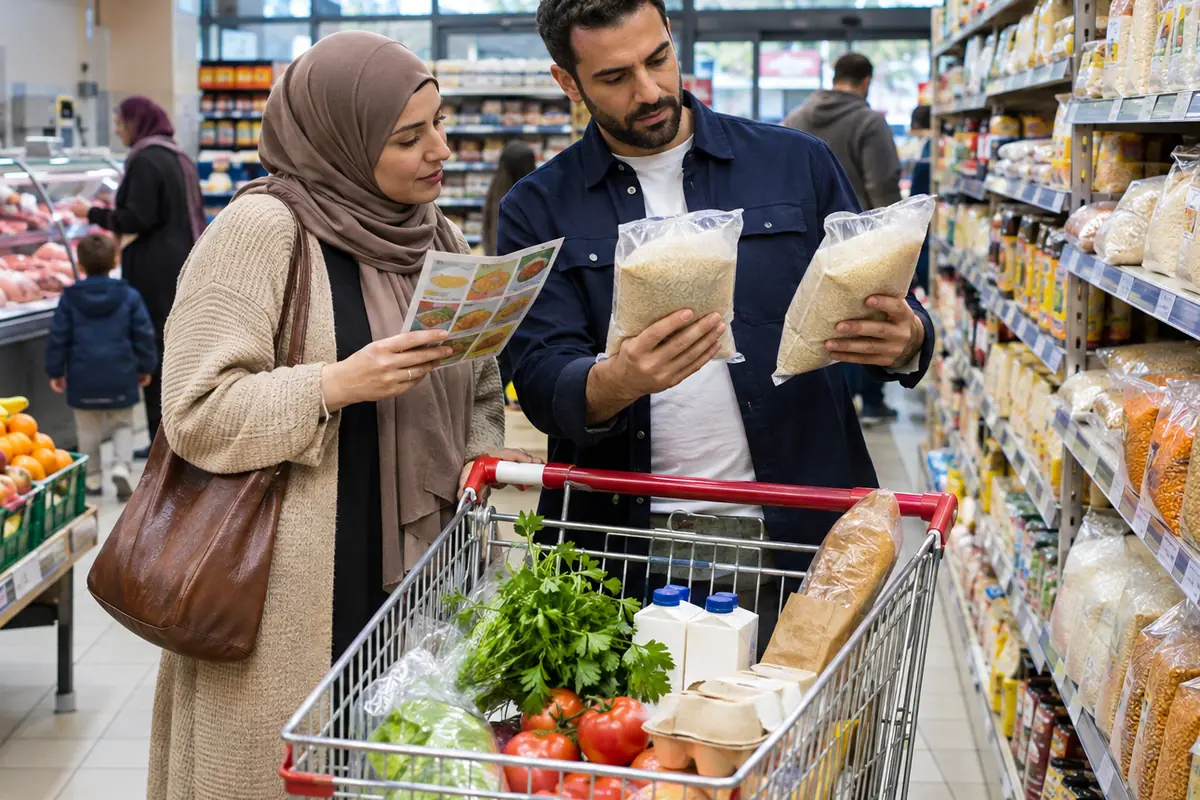
UAE, Dubai is a city where halal food is the default, so a halal supermarket is simply a supermarket, from hypermarkets in malls to community co-operatives and small neighbourhood groceries. Residents from South Asia, the Arab world, East Africa and the Philippines buy halal groceries to match many cuisines, comparing prices and offers between chains, markets and delivery apps. Because the baseline is halal, shoppers focus on origin, brand, freshness and the few items that need closer ingredient checks in processed products.
Why a halal supermarket in Dubai is different
In most countries a halal supermarket is a specialist, but in the United Arab Emirates it is the standard model. Fresh meat and poultry sold through the main grocery channels are expected to meet halal requirements, and the question shoppers ask is rarely whether something is halal at all but where it is from.
Authorities supervise food safety and labelling across the emirates, and importers must follow national rules on halal claims for meat and certain products. Shoppers still read the label, since imported goods arrive from dozens of countries and not every item on a shelf is a meat product.
Some stores keep a clearly separated section for items that are not part of the halal range, usually behind signs and with separate handling. Customers who prefer to avoid any proximity simply shop elsewhere, and the market offers plenty of alternatives in every price range. Visitors on short stays are often surprised by how easily they can find familiar brands and clearly labelled meat.
Hypermarkets, co-operatives and neighbourhood groceries
Dubai grocery shopping happens in a wide range of formats. Hypermarkets in malls sell everything from electronics to fresh fish, community co-operatives anchor residential areas, and small groceries known as baqala fill the gaps in older districts. Each format suits a different moment in the week.
Large chains compete on range and convenience. Their meat counters offer cuts of lamb, goat, beef and chicken, their bakeries produce flatbreads, and their produce sections arrange fruit and vegetables from several continents. Some stores specialise in British, European or Asian ranges to serve expatriate customers.
Neighbourhood groceries stay open late and deliver to nearby buildings. They are essential for a forgotten ingredient, a phone top-up or fresh bread at night, and many residents keep a favourite one close by. The personal relationship with a shopkeeper often translates into small favours and flexible service, such as holding an item, accepting a phone order or delivering a bag of bread to the door before work.
Halal groceries for a multinational population
Dubai's population includes people from nearly every part of the world, and its groceries reflect them. Aisles hold basmati and long-grain rice in large sacks, lentils, chickpeas, spices, saffron, dates, tahini, flatbreads, noodles, coconut milk and sauces for Filipino, Indian, Pakistani, Levantine and Gulf cooking.
Fresh produce arrives from regional farms and international suppliers. Herbs, leafy greens, citrus, tomatoes, dates and tropical fruit are everyday purchases, and displays change with the season and the shipping schedule. Shoppers often check the origin label to choose between local and imported items.
Households also buy ready meals, frozen snacks, dairy and bakery products. Camel milk and its related products are a regional speciality that attracts curious visitors and loyal local customers. This variety allows cooks to prepare traditional dishes from home or experiment with the flavours of other communities living nearby.
Comparing prices between chains, markets and delivery apps
Price comparison is a habit among Dubai residents, whether they are families on a budget or professionals who value time. Shelf tickets, loyalty-card prices and app listings often show different amounts for the same product, and shoppers check unit prices to find the best value for rice, oil, chicken and water.
Traditional markets and wholesale areas give another option. Fruit, vegetable and fish markets sell by the box or kilo, with vendors who expect polite negotiation on larger purchases. Cooks who prepare big family meals or host gatherings frequently buy staples there and complete the list at a supermarket.
Quality varies with source, and shoppers balance cost against freshness and origin. A low price on chilled meat is attractive only when the date is comfortable and the cold chain is visible. Many customers choose a trusted brand for premium cuts and a cheaper line for everyday cooking. Reading the origin and the packing date helps tell apart chilled, frozen and thawed products, which can look similar behind the glass of a counter.
Promotions, shopping festivals and Ramadan campaigns
Retail promotions are woven into the rhythm of the city. Supermarkets publish catalogues and app banners, run weekly campaigns and join citywide shopping events, when selected groceries, household items and electronics receive special pricing. Details change frequently, so shoppers read the fine print on each offer.
Ramadan is the most intense period for food retail. Stores build large displays of dates, rice, flour, ghee, juices, sweets and lamb, and many extend their opening hours into the night. Basket promotions and charity collection points appear at entrances, and households stock up before the first day.
Eid and other festivals bring further peaks. Butchers and bakeries receive advance orders for special cuts, cakes and pastries, and shoppers plan collection times to avoid queues. Loyalty programmes sometimes reward regular customers with points that can be spent on groceries, so frequent visitors to one chain benefit over time. Families with several adults sometimes register separate cards to collect more rewards on the same shopping trip.
Heat, malls and the rhythm of shopping in Dubai
Dubai's summer heat influences when and how people shop. Residents prefer air-conditioned malls and covered supermarkets, and they visit in the evening when temperatures ease. Fresh food travels in insulated bags, and many families use delivery services to avoid carrying heavy bags between car and building.
Weekends see a surge in family outings. Hypermarkets become social places where children play, parents compare brands and relatives meet in the cafés. Midweek mornings are calmer, and customers who want to read labels carefully or speak to a butcher often choose these quieter hours.
Car culture and spread-out districts also matter. Some residents live a short drive from several large stores, while others depend on taxis, buses or the metro. Those without a car often rely on neighbourhood groceries, which compensate with convenient locations and generous delivery services.
Online ordering, rapid delivery and wholesale buying
Delivery apps are a major part of daily life in Dubai. Customers choose groceries from supermarkets and local shops on a phone, then receive them within a short window. Reviews, photographs and substitution settings help avoid mistakes, particularly with fresh meat, eggs and delicate fruit.
Subscription services and scheduled deliveries suit regular purchases such as water, milk, rice and cleaning products. Households that organise a monthly order spread the cost and avoid heavy lifting. Businesses, restaurants and caterers use wholesale suppliers who deliver in larger quantities to kitchens and warehouses.
Customers should still read product pages and labels. Imported processed foods may contain animal-derived additives or flavourings, and the description online may be brief. Looking at the ingredient list, the brand and the country of origin gives a more complete picture before adding an unfamiliar item to the basket.
Retailers and organisations to know
- Carrefour UAE — French-origin hypermarket operator with large Dubai stores, fresh meat counters and an online delivery service.
- LuLu Hypermarket — Gulf hypermarket group with Dubai stores known for broad international food ranges and fresh departments.
- Spinneys — Dubai supermarket chain with a focus on fresh produce, butchery and a mix of regional and imported products.
- Union Coop — Dubai consumer co-operative with neighbourhood supermarkets and online ordering across residential districts.
- Waitrose UAE — British-style supermarket brand in Dubai with a wide range of imported groceries and a premium meat counter.
- Talabat — Delivery platform that brings groceries from supermarkets and local shops to homes across Dubai.
- Dubai Municipality — Local authority responsible for food control and public health inspection in the emirate.