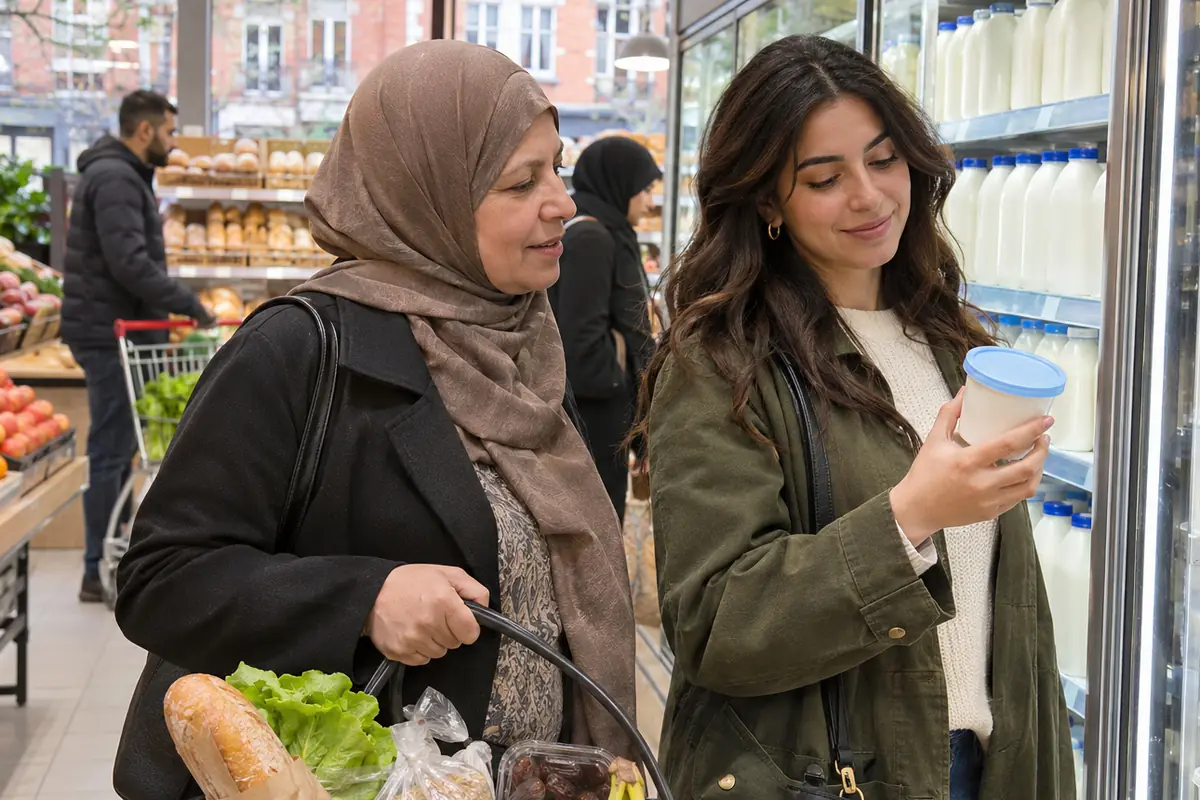
In the UK, Leeds has one of Yorkshire's broadest halal supermarket scenes, shaped by long-established Pakistani, Bangladeshi and Somali communities and by a large student population. Grocers, butchers and bakeries line streets in Beeston, Harehills and Chapeltown, while national chains and a historic indoor market add more choice. People in Leeds fill their baskets with halal meat, rice, lentils, spices and frozen lines for weekday cooking and festival tables, weighing up prices and promotions across local independents, discount chains and web delivery. Labels and certification marks remain the key check.
A halal supermarket map of Leeds neighbourhoods
Leeds does not have a single halal shopping district. Instead, specialist stores cluster in several parts of the city, each with its own character. Beeston and Holbeck to the south, Harehills and Chapeltown to the north-east, and the student districts to the north-west all offer different kinds of halal food outlets.
Dewsbury Road in the south of the city is widely associated with Asian groceries, butchers and sweet shops, while Roundhay Road and the Harehills streets provide a similar mix to the east. Shoppers who live nearby often walk to buy bread, vegetables and meat several times a week.
Larger halal supermarkets sit alongside these parades and typically offer a full range under one roof, from fresh meat and fish to dry goods, frozen items and household basics. Their size allows wider choice, but small grocers still win loyalty through freshness and personal service.
Out-of-town retail parks and the large supermarkets around the ring road add convenience for drivers, with trolley space and parking for big family shops. Residents without a car depend on frequent bus routes, which connect the main halal shopping streets with the centre and the universities.
Kirkgate Market and the traditional fresh-food trade
Leeds Kirkgate Market is among the largest covered markets in Europe, and its stalls sell fruit, vegetables, fish, meat and spices to a very mixed clientele. Muslim shoppers use it for fresh produce, herbs, nuts and dried fruit, and they ask stallholders about the source of meat before buying.
Traders at the market often respond to seasonal demand, bringing in specific fruit and vegetables for Ramadan or Eid. Because stalls change owners and ranges over the years, regular visitors learn which counters they trust rather than relying on a fixed list.
A trip to the market fits neatly with city-centre errands, and many people combine it with a visit to a halal butcher in an outer district. The two together give a fresh, varied basket without needing a trip to an out-of-town store.
Halal groceries from staples to ready meals
The weekly Leeds shopping list usually begins with halal chicken and lamb, then adds basmati rice, chapati flour, tinned tomatoes, lentils, cooking oil and spices. Fresh coriander, chillies, ginger and garlic are bought from greengrocers or market stalls, where prices and quality differ from day to day.
Ready meals and frozen snacks have become a large part of the market. Samosas, spring rolls, kebabs and parathas are stocked in freezers of independent shops and in the world food sections of national supermarkets, and many families keep a supply for guests or busy evenings.
Because a halal logo does not guarantee that every ingredient is acceptable, shoppers continue to read the full list. Gelatine in desserts, alcohol in flavourings and animal fats in pastry are well-known pitfalls, so a quick scan is routine even for familiar brands.
Sweets and bakery goods are a point of pride in many districts, with traditional mithai, baklava and fresh bread made in local kitchens. Buyers often ask about ingredients such as ghee or gelatine, especially when ordering large trays for celebrations.
Drinks and condiments also deserve a glance. Pomegranate molasses, rose syrup, tamarind paste and pickles are stocked in the specialist shops, while larger supermarkets carry limited selections. Shoppers who cook regional dishes often visit more than one store for specific ingredients.
Certification, labels and trusted suppliers
Several separate organisations certify the halal products sold in Leeds shops, and the Halal Monitoring Committee is one whose mark appears on packs. Each publishes its own standards, and shops that display certificates give customers a way to verify claims made at the counter or on packaging.
Some Leeds butchers prepare meat from their own suppliers and explain how slaughter is carried out, while supermarkets rely on logos and supplier information. Both routes work for different buyers, and a well-informed customer usually knows which kind of assurance they personally prefer.
Hygiene, allergen labelling and food standards are the responsibility of local authority inspectors and the Food Standards Agency. Shoppers can look up hygiene ratings of shops, which sit alongside religious assurance as another way to judge a place before buying.
Prices, discounts and offers across Leeds retailers
Competition is strong in Leeds, which has many halal grocers within a short distance of each other, and that often benefits customers. Shelf prices on rice, flour and oil may differ between neighbouring shops, so people who shop weekly learn which store is usually the better value for each item.
Special offers take several forms: bulk-buy discounts on sacks of rice, weekend meat deals, loyalty-card prices at the national chains and promotional boards outside independent stores. These offers change frequently, and the accurate figures are always those displayed in the shop on the day.
The discounters Aldi and Lidl are popular for dairy, tinned food and fresh produce, while Asda, whose head office is in Leeds, and Morrisons, with its Yorkshire roots, attract shoppers who like a single large store. Many households split their shop between a discounter and a halal specialist.
Seasonal rhythms influence value as well. Fruit and vegetables cost less when in season and plentiful, while dates, nuts and sweets draw more attention around Ramadan. Comparing a few shops in the days before a festival helps households decide where to buy each item.
Students, hospitals and the daily rhythm of shopping
Leeds hosts several universities, and students from the Gulf, South Asia, Africa and Southeast Asia look for familiar food within walking distance of their halls. Convenience stores near campus often stock halal chicken, rice and noodles, and the big supermarkets are a bus ride away.
Staff at the city's teaching hospitals and large employers also keep the area busy. Shift workers value shops that open early or late, and many neighbourhood grocers adapt their hours accordingly, selling bread, milk and snacks at times when larger stores are quiet.
Friday afternoons and the days before Eid are the busiest times. Butchers may prepare larger orders in advance, and customers who want specific cuts reserve them by phone or in person, which avoids long waits and empty trays.
Cash and carry, delivery and planning bigger purchases
Leeds has cash and carry warehouses and wholesale suppliers that serve restaurants, takeaways and large families. Entry rules differ, with some requiring a business account, so it is worth confirming access before driving to an industrial estate with a boot full of empty crates.
Home delivery covers most of the city. Tesco, Asda, Sainsbury's, Morrisons and Ocado deliver groceries, and several halal butchers and online sellers send meat boxes by courier. Buyers compare delivery charges, minimum order values and cold-chain packaging before choosing a supplier.
For large gatherings such as weddings and charity dinners, caterers usually place bulk orders weeks ahead. Giving a supplier time to prepare ensures the right quantities of meat, rice and vegetables, and gives space to confirm certification where guests expect it.
Retailers and organisations to know
- Asda — Supermarket group with its head office in Leeds, offering halal meat and world food ranges in many city stores and online.
- Morrisons — Yorkshire-founded chain with large Leeds stores, fresh meat counters and home delivery.
- Tesco — National supermarket with halal packaged chicken and lamb in selected Leeds branches.
- Aldi — Discount grocer widely used in Leeds for staples, dairy and produce.
- Lidl — Discounter with stores across the city, a common choice for tinned goods and fresh vegetables.
- Leeds Kirkgate Market — Large covered market whose stalls sell fresh fruit, vegetables, fish, meat, spices and dried fruit.
- Halal Food Authority — Independent British certification body that audits abattoirs and producers supplying halal food to retailers.