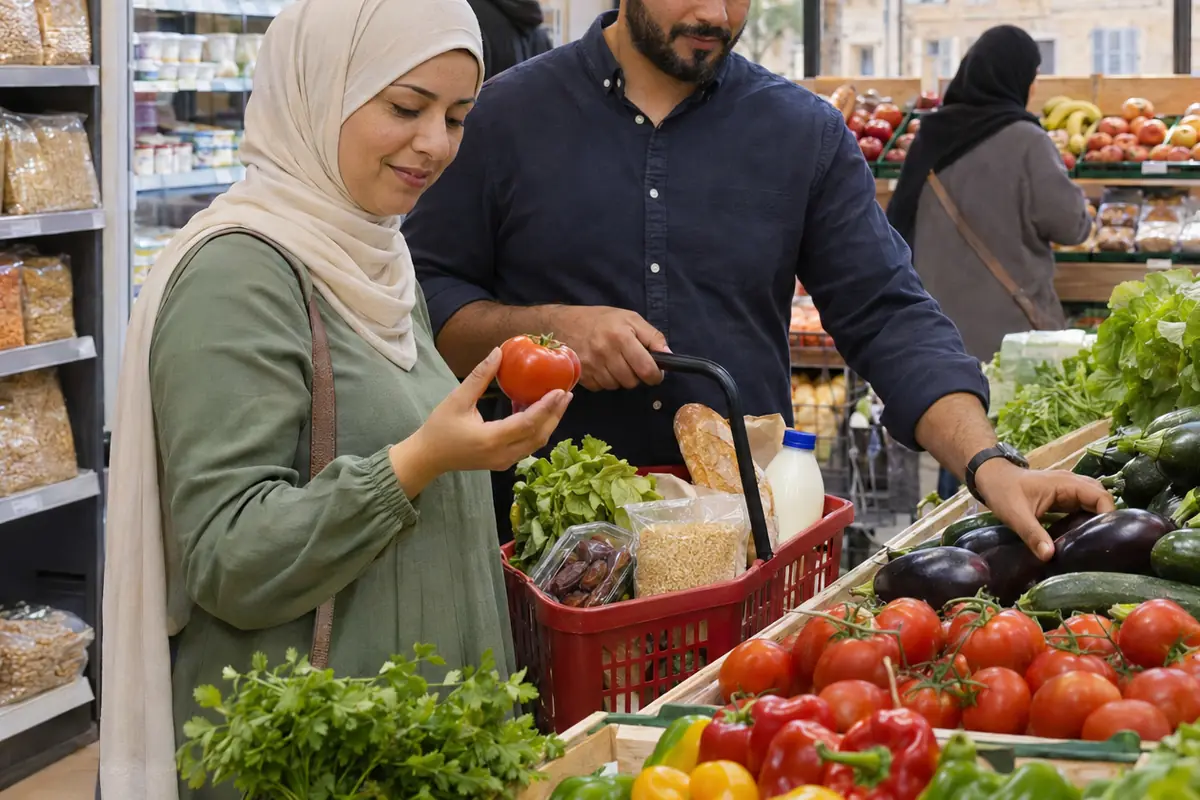
In the UK, a halal supermarket is a grocery store stocking meat, poultry and everyday groceries prepared according to Islamic rules, alongside rice, spices, pulses, dairy and frozen lines. The sector spans independent shops in cities such as Birmingham, Bradford, Leicester and east London, national chains with halal ranges, and cash and carry wholesalers. Prices and offers vary by banner and neighbourhood, so shoppers usually compare labels, certification bodies and weekly promotions before filling a trolley. Fresh produce and meat counters often decide loyalty.
Where British shoppers find halal supermarket groceries
Britain offers three main routes to halal groceries. Independent supermarkets and butchers cluster in areas with long-established Muslim communities, national chains carry halal meat or dedicated aisles in selected stores, and wholesalers supply both shops and large households.
The choice usually depends on the postcode. Dense urban districts offer many competing stores within walking distance, while rural areas often rely on a single larger supermarket, a weekly market stall or home delivery from a specialist.
Retail parks and out-of-town sites add another option for families with a car. Large-format stores there tend to combine a halal counter with household goods, which suits a monthly stock-up better than a quick daily visit.
Corner shops remain valuable for late opening and convenience. Many family-run grocers keep a modest halal fridge and a few staples, which makes them useful for a forgotten ingredient even if the weekly shop happens elsewhere, usually at a larger store on a bus route.
Communities and regional character of halal shopping
South Asian communities in the Midlands, Yorkshire and the north-west shaped many of the best-known halal food streets. Turkish, Arab, Somali and North African shops add their own ranges, from flatbreads and olives to regional spice blends.
London has the widest variety, with markets, high street grocers and large-format stores serving distinct neighbourhoods. Glasgow, Edinburgh, Cardiff and Belfast have smaller but active scenes, where a few stores often serve a wide surrounding area.
Students and workers also influence the map. University towns and hospital districts usually see demand for quick halal meals, frozen lines and affordable staples, which local shopkeepers adapt to with smaller pack sizes.
Festivals bring a further layer of regional colour. Eid markets, community fairs and pop-up stalls appear in many cities, selling sweets, spices and clothing alongside groceries, and they give smaller importers a chance to reach shoppers outside their usual neighbourhood.
How halal supermarket prices differ between banners
Price levels depend on the store format. Large chains buy in bulk and run regular promotions on staples, whereas independents may compete through fresh produce, loose spices and meat cut to order. Neither route is automatically cheaper in every basket.
Comparing the cost per kilo or per litre, rather than the sticker price, is the dependable method. Shoppers also check whether a low price reflects a smaller pack, a different cut or a lower grade of meat, since these details change the real value.
Where a shop sits changes the price as well. Rents in central districts feed through to shelf prices, so an edge-of-town shop or a market stall may undercut a high street grocer on the same items, though travel costs must be weighed against any saving.
Own-brand products deserve consideration. Several chains sell halal-friendly pulses, rice and tinned goods under their own label at lower shelf prices than branded equivalents, and many shoppers find the quality comparable once they have tried a small quantity first.
Offers, loyalty schemes and seasonal promotions
National grocers publish weekly offers and member pricing through their apps, and some include halal meat or ethnic food ranges in these promotions. Independents tend to rely on shelf stickers, multi-buy deals and bulk sacks of rice, flour and lentils.
Demand rises ahead of Ramadan and Eid, when many stores run special selections of dates, sweets, meat and cooking essentials. Planning purchases early and comparing offers across several shops helps households spread the cost of festive cooking.
Clearance of short-dated goods is another source of savings. Fresh meat reduced late in the day can be frozen at home, as long as the packaging date, the storage advice and the halal certification remain clearly readable.
Halal certification and labelling in Britain
Marks from national certifiers such as the Halal Monitoring Committee, alongside the Halal Food Authority, appear on packaging or at the counter in local shops. The scope of each certificate differs, so shoppers read what is actually covered.
Food labelling rules require ingredient lists and allergen information, but halal status is voluntary. Customers therefore look at the certifier, the stated slaughter method and the absence of alcohol or pork-derived ingredients in sauces, sweets and ready meals.
Because standards are not identical between certifiers, some households follow a body they trust and ignore others. Shopkeepers who explain which certificate applies to each product tend to earn lasting loyalty from careful buyers.
Fresh meat, frozen food and everyday staples
Meat remains the anchor of a halal grocery trip. Counters offer lamb, beef and chicken, often cut according to the customer's request, while freezer aisles carry burgers, kebabs, samosas and ready-made parathas for quick evening meals.
Staples such as basmati rice, chickpeas, ghee, tinned tomatoes and spice blends are widely sold in large packs. Buying in volume frequently lowers the unit cost, provided the household has storage space and uses the products before expiry.
Fruit and vegetables deserve a separate look. Markets and greengrocers often sell okra, coriander, mint and aubergines more cheaply than packaged supermarket equivalents, and the same shopper may combine both sources in a single week.
Wholesalers, cash and carry and online delivery
Cash and carry outlets supply restaurants, caterers and shop owners, and some accept registered individuals as members. Their pallets and catering packs suit large families, mosque kitchens and community events planning meals for many guests.
Online grocery has widened access. Mainstream retailers deliver nationwide, specialist halal butchers ship chilled boxes by courier, and local apps connect neighbourhood stores with customers who lack time or transport.
Delivery fees, minimum baskets and time slots differ from one provider to another. Households ordering regularly compare these conditions as carefully as product prices, because a small basket can cost more to deliver than it saves.
Practical tips for comparing halal groceries across the UK
Writing a short shopping list and checking three sources, one chain, one independent and one wholesaler, offers a fair comparison. Photographing shelf labels makes it easy to compare unit prices later without relying on memory.
Freshness, hygiene ratings and clear certification deserve as much attention as the headline price. Asking staff about meat origin and delivery days usually produces honest answers, and reliable shops welcome such questions from regular customers.
Consumer organisations publish independent advice on unit pricing and labelling, which helps newcomers to a city understand what a fair offer looks like before they settle on a regular store.
Neighbours, mosque notice boards and community groups often share recommendations about reliable butchers and fair-priced grocers. Such word of mouth, combined with a personal visit, usually gives a better picture than a single price list, because quality and service vary as much as cost. Regular customers frequently negotiate small favours too, such as cutting meat to a preferred size or reserving a larger order before a festival weekend.
Retailers and organisations to know
- Tesco — National supermarket chain with halal meat and ethnic food ranges in selected stores and through online delivery.
- Asda — Large grocer known for broad world food aisles and halal meat lines in many urban stores.
- Morrisons — Supermarket group with fresh meat counters and halal options in areas with strong local demand.
- Bestway Wholesale — Cash and carry wholesaler supplying independent halal grocers, caterers and registered customers with bulk staples.
- Booker — Wholesale supplier to independent retailers and caterers, including ethnic and halal product lines.
- Halal Monitoring Committee — British certification and monitoring body whose marks appear on halal meat and food products.
- Halal Food Authority — Certification organisation that audits abattoirs and food businesses supplying halal products to the British market.