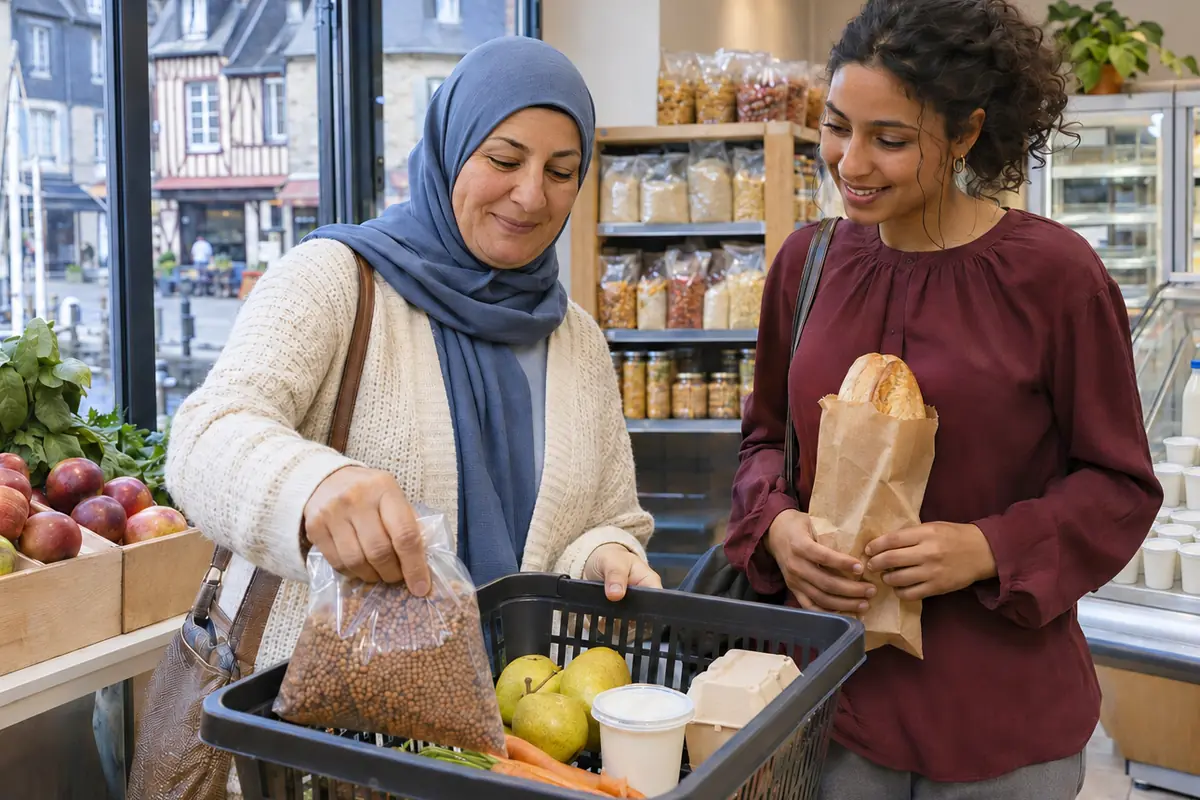
A halal supermarket discount store sells everyday groceries that meet Islamic dietary rules, with no pork or alcohol among the ingredients and meat from animals slaughtered according to religious requirements. Shoppers look for competitive prices on rice, flour, oil, pulses, frozen foods and fresh produce, alongside a butcher counter that stocks lamb, beef and poultry. The format ranges from small neighbourhood grocers and independent butchers to national chains with a dedicated halal aisle, cash-and-carry wholesalers and online delivery services serving families and caterers.
What a halal supermarket offers shoppers
A halal supermarket brings together the ordinary weekly shop and the specific requirements of Muslim households. The shelves carry staples such as rice, bread, tea, spices and tinned vegetables, while the chilled and frozen sections hold meat, poultry, dairy and ready meals that have been checked against dietary rules.
What separates it from a standard store is the attention to ingredients. Gelatine, animal rennet, certain emulsifiers and alcohol-based flavourings can appear in sweets, desserts, cheese and sauces, so a halal-focused retailer usually sorts or labels products to help customers avoid ambiguity.
Many shops also serve as meeting points for their communities. Customers swap recipes, ask the butcher for particular cuts and learn which delivery days bring the freshest bread, vegetables and herbs, a social side that large anonymous stores rarely replicate.
Halal supermarket discount shopping: keeping the weekly bill low
The most reliable way to compare prices is the unit price shown on the shelf label, expressed per kilogram or litre. It makes a large sack of rice comparable with a small packet, and reveals when a promotion on a smaller pack is not actually cheaper than the standard size.
Own-brand products often cover the basics at a lower cost than famous labels. Flour, sugar, pasta, lentils, chickpeas and tinned tomatoes are good candidates, whereas spice blends, sauces and snacks differ more in taste, so many households test one brand at a time before switching.
Buying in bulk helps families with storage space, provided the products keep well. Dry goods such as rice, beans and bulgur last for months in airtight containers, while fresh items and open packs of dairy need to be used promptly, otherwise a bargain turns into waste.
Halal meat counters and butchers
Meat is the category where shoppers look most carefully. Beef, lamb, goat and chicken are usually sold fresh from a counter or pre-packed in chilled trays, and customers check where the animals were processed and which body certified the process. A visible certificate in the shop gives reassurance, and good butchers explain it willingly.
Cuts and preparation vary by cuisine. South Asian cooking favours bone-in pieces for curries, Middle Eastern recipes use minced lamb for kofta and skewers, and North African dishes call for shoulder and shank for slow tagines. A butcher will cut, trim or mince to order if asked.
Processed meats such as sausages, burgers and cold cuts need an extra look at the ingredient list. Casings, seasonings and binders differ between manufacturers, and a product labelled beef is not automatically suitable if other components are uncertain.
Frozen poultry and meat are popular for stocking up, since they allow larger purchases at a time. Signs of ice crystals or damaged packaging may indicate a broken cold chain, so shoppers choose packs that are solid and intact.
Fresh produce, bakery and dairy
Fruit and vegetables are often the best value in neighbourhood halal grocers. Tomatoes, aubergines, courgettes, peppers, onions and herbs are sold in crates and by weight, and customers can pick ripe items themselves. Seasonal produce tends to taste better and costs less than out-of-season imports.
Bakeries attached to halal shops sell flatbreads, pitta, naan, simit and sweet pastries. Some stores deliver in the early morning, so the choice is best before midday. Fillings and glazes should be checked, because lard, gelatine or alcohol can occasionally appear in industrial pastries.
Dairy products such as yoghurt, labneh, feta-style cheese and cream are staples of many cuisines. Cheese can contain animal rennet, so labels that mention microbial or vegetable rennet are helpful, and shoppers also check dates and chilled storage before buying.
Halal supermarket chains, independents and discount wholesalers
National supermarket chains in many countries now stock halal ranges, typically chicken, lamb mince and a selection of spices and sauces. Availability depends on the branch and local demand, which is why branches in diverse neighbourhoods often carry a wider selection than stores in areas with fewer customers asking for it.
Independent halal grocers and butchers remain the backbone of the market. They know their suppliers, take special orders and offer products that chains do not stock, including regional spices, specific cuts and imported specialities from the Middle East, Africa and South Asia.
Cash-and-carry wholesalers serve restaurants, caterers and community groups, and some admit private customers with a trade card. They sell in large cases and sacks, which suits events, mosques, weddings and families who buy for many mouths at a time.
Frozen food, tinned goods and store-cupboard staples
A well-stocked freezer cuts down on shopping trips. Frozen kebabs, chicken pieces, paratha, samosas, spinach, okra and fish are practical for busy weeks, and families often buy several packs when a promotion starts. Checking the cold chain at the shop matters as much as the price.
Tinned chickpeas, fava beans, tomatoes, coconut milk and fish keep for a long time and form the base of countless recipes. Labels on tinned soups and ready sauces deserve a quick look, because stock cubes and flavourings may include ingredients that some customers prefer to avoid.
Rice, lentils, flour, cooking oil, dates and tea are the classic staples, and they are where larger packs save the most per kilogram. Storing them in airtight containers away from heat and damp keeps quality high for months.
Understanding halal labels and certification
Halal certification is carried out by independent organisations in most countries, and the rules and recognition differ between them. A logo on a pack tells shoppers that a certifier audited the supplier, yet customers also look at the certifier's reputation and whether the certificate covers the specific product.
Labels in many countries must list ingredients and allergens, though they do not have to say how an animal was slaughtered. For that reason, reliable shops provide supporting information about their suppliers on request, and customers do well to ask rather than rely on vague words such as authentic or traditional.
Shoppers who are unsure can contact the manufacturer, look up the certifier's website or ask a trusted community organisation. Consumer protection bodies can help with complaints about misleading claims and explain the rights that apply when food is wrongly described.
Shopping for Ramadan, Eid and special occasions
Demand rises sharply before Ramadan and the Eid festivals, when dates, flour, rice, oil, meat and sweets are bought in larger quantities. Planning ahead means drawing up a list, comparing unit prices and avoiding last-minute trips when queues are long and popular items have sold out.
Large gatherings, weddings and community meals often rely on pre-orders. Butchers can prepare whole lambs, trays of mince or portioned poultry for collection on a set day, and agreeing weight, cut and pickup time in advance avoids disappointment on the day itself.
Home delivery and online ordering have become common for these occasions. Customers compare delivery windows, cold-chain handling and minimum orders, and make sure someone is at home to receive chilled goods, since meat and dairy should not sit outside for long.